How to Plan a Destination Wedding From Los Angeles or Dallas
Nine countries and fifteen years of travel weddings, distilled into the order of operations that actually works: dates, paperwork, light, travel days, and coverage.
Couples ask us the same first question whether they are calling from Santa Monica or from McKinney: is a destination wedding actually easier? Sometimes. A single resort or villa can absorb your ceremony, your dinner, your welcome party, and your guests' lodging under one contract, and the guest list tends to edit itself politely. But every hour of local logistics you delete gets replaced by an hour of coordination across a time zone, a language, and a legal system that was not written with you in mind.
We have photographed weddings in nine countries across 15 years and more than 1,000 weddings, and the couples who genuinely enjoyed the planning all did roughly the same things in roughly the same order. Here is that order, written for people starting from Los Angeles or from Dallas and Fort Worth.
Start With Flights, Not With Inspiration Images
The romantic version of this decision starts with a photograph of a place. The version that works starts with a flight map and a guest list. Before you fall for a property, look at how your people actually get there from LAX or DFW, and how much of a vacation day the trip eats.
From Los Angeles, the short-haul destinations are the ones that fill: Cabo, Puerto Vallarta, Maui and Kauai, Vancouver and the Canadian Rockies, Las Vegas and Palm Springs if you want the feel of travel without the passport. From DFW, the same logic points at Cancun and Riviera Maya, the Caribbean, Mexico City, and a very manageable hop to the Rockies. Europe is a different commitment for both metros and needs a longer runway and a smaller list.
One useful filter: count how many of your must-have guests can make the trip in one travel day each way. If most of them can, your attendance rate holds. If the answer is a connection plus a ferry plus a two-hour drive, expect a smaller wedding and plan for it happily rather than being surprised by it. You can see the range of places we have worked on our destination wedding page.
The Legal Part Nobody Enjoys
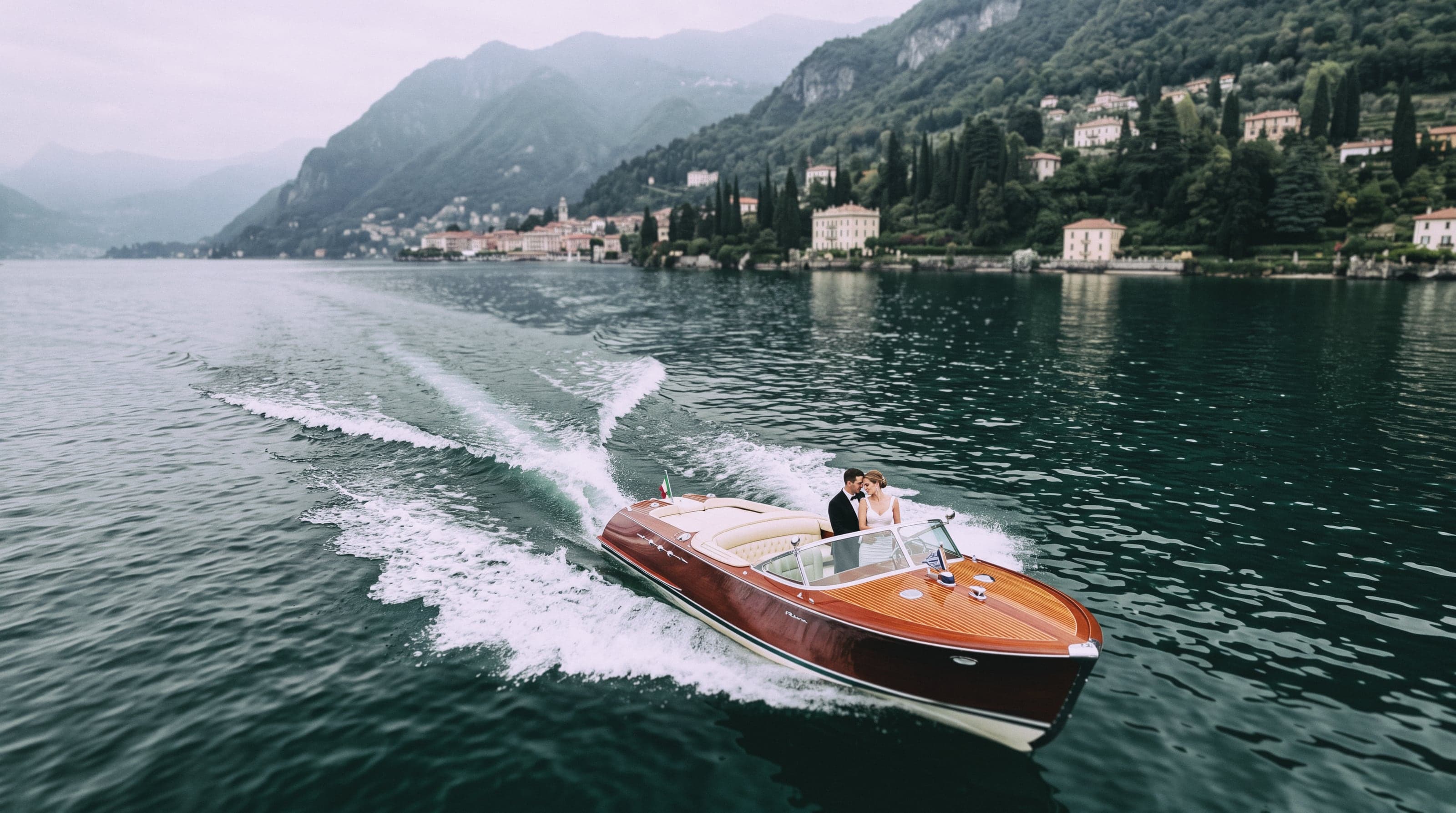
Marriage law is local, and it is the single item most likely to derail an otherwise beautiful plan. Some countries require residency periods measured in days before the license is valid. Some require blood work, translated documents, apostilles on birth certificates, or a civil officiant who is available only on weekdays. Mexico and much of the Caribbean have well-worn processes and resort coordinators who run them weekly. Italy and France are more paperwork, and Lake Como weddings in particular reward hiring a local planner who has done it before.
The cleanest solution, and the one many of our couples choose, is to handle the civil signing quietly at home in California or Texas a few days before departure, then hold the ceremony you actually care about abroad without a legal clock running. Nothing about the day changes photographically. Everything about your stress level does.
Whichever route you take, get the requirements in writing from a local source, not from a blog. Rules change.
A Realistic Destination Timeline
Domestic weddings can absorb a compressed schedule. Destination weddings cannot, because your vendors, your guests, and your dress are all in transit at some point. This is the skeleton we plan against.
Counting backward from the wedding date
- 12 to 14 months out: choose the region and the week, weighing hurricane season, monsoon season, and local holidays
- 10 to 12 months out: sign the venue, retain a local planner, and book photography and film before dates go
- 8 to 10 months out: send save the dates, earlier than you would domestically, so guests can buy fares and take leave
- 6 months out: research legal requirements and start any document collection or translation
- 3 months out: confirm the room block, welcome event, and transport between hotel and ceremony site
- 6 weeks out: build the hour-by-hour timeline with your planner and photographer against local sunset
- 3 to 4 days out: arrive. Vendors travel a day ahead of you, and so should your gown
- 2 days out: welcome party, and a short couples session while you are rested and the light is good
Light and Weather Do Not Negotiate
A destination changes the physics of your day more than couples expect. Tropical sun at 14 degrees north is straight overhead and brutal at midday, and it drops fast at the end of the afternoon, so the golden window is shorter than it is at home. Mountain venues lose the sun behind a ridge an hour before the published sunset time. Coastal properties in Mexico and Hawaii get an afternoon breeze that will decide your veil, your ceremony arch, and whether the beach dinner survives.
So we build the schedule backward from the local sunset rather than forward from hair and makeup, exactly the way we describe in building the wedding-day timeline around light. The offsets change by latitude, the method does not. We also plan the rain version before we need it, because a tropical shower at 4pm is a twenty-minute event, not a catastrophe, if somebody has already chosen the covered alternative.
The upside is enormous. A place you flew to should look like a place you flew to. That means we scout the property the day before, find the shoreline, the courtyard, the staircase, the view that only exists there, and we build in a separate session so those frames are not fighting your cocktail hour for time.
Bringing Your Own Photographer
The resort will offer you a house photographer, and for some couples that is genuinely the right call. For most of the couples we work with, it is not, because the person who photographs your wedding is the one vendor whose work you keep looking at for fifty years, and you should know their work before you commit to it.
Traveling with us means travel and lodging are added to the collection, and in exchange you get a team that has done this in nine countries, arrives days early, scouts, adapts to a language barrier, and brings backup equipment because there is no camera store on the island. It also means photo and film under one roof, which matters more abroad than at home. Two crews who plan together are not competing for the same fifteen minutes of light on a cliff.
Our destination work is spread across the archive, from a Hawaii wedding to Los Cabos to Aruba. Different countries, same method.
A destination wedding should look like the destination. Otherwise you flew a long way for a background you could have had at home.
What We Need From You
Very little, honestly. Your date, your property, and an introduction to your local planner. From there we handle the light plan, the shot list conversation, and the equipment logistics, and we coordinate directly with the coordinator on the ground so you are not translating between vendors from a laptop at midnight.
Coverage and travel are quoted plainly on our wedding pricing page, and the artwork side of the experience, albums and framed pieces designed in person after you are home, works the same whether the wedding happened in Malibu or Mexico. If a date abroad is already circled on your calendar, tell us where and when and we will tell you what the light will be doing when you get there.