Should You Hire a Film Photographer for Wedding Portraits?
When couples ask about film, they mean the bridal and couple portraits they plan to hang. Here is our honest, opinionated case for shooting those on digital.
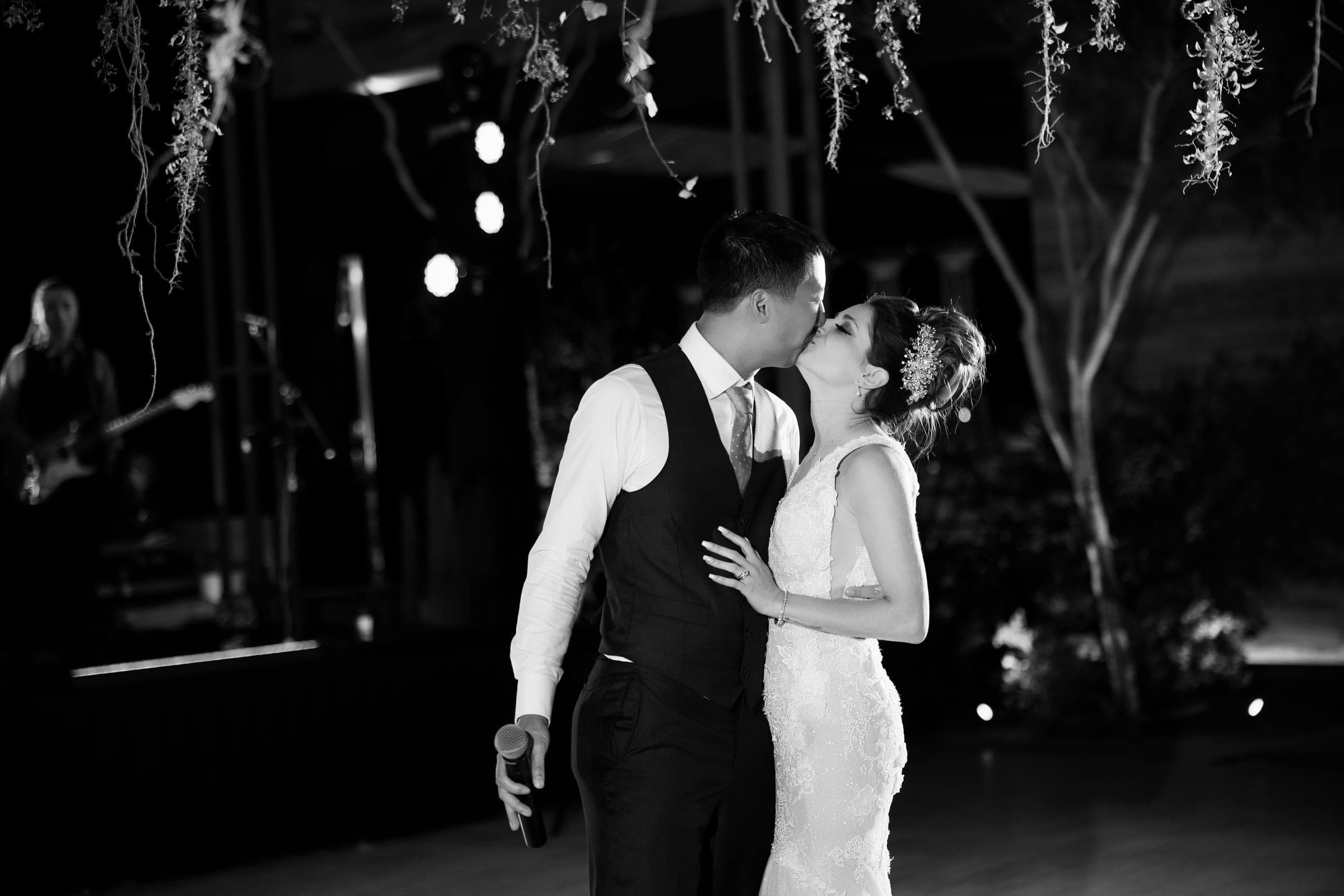
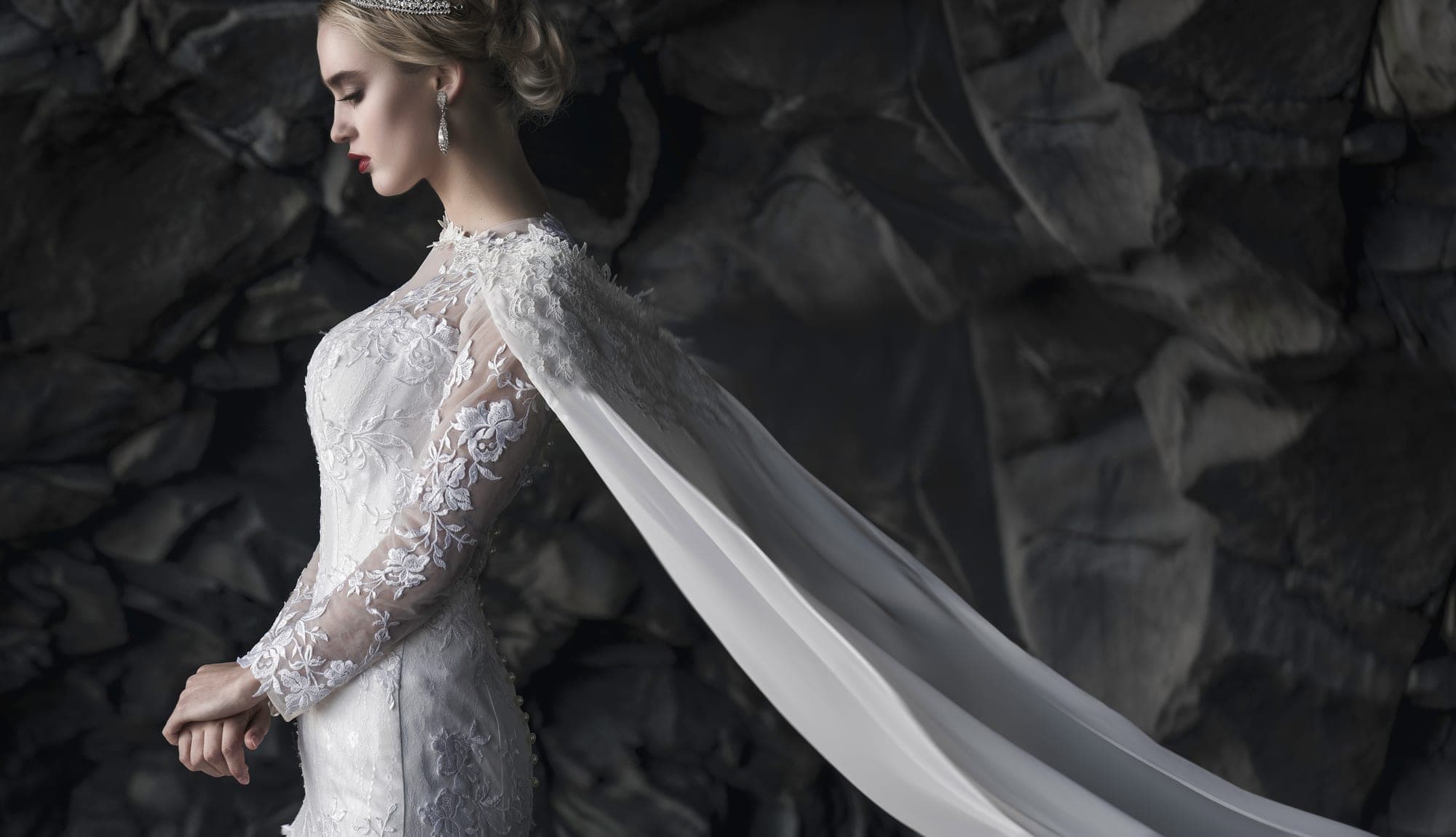
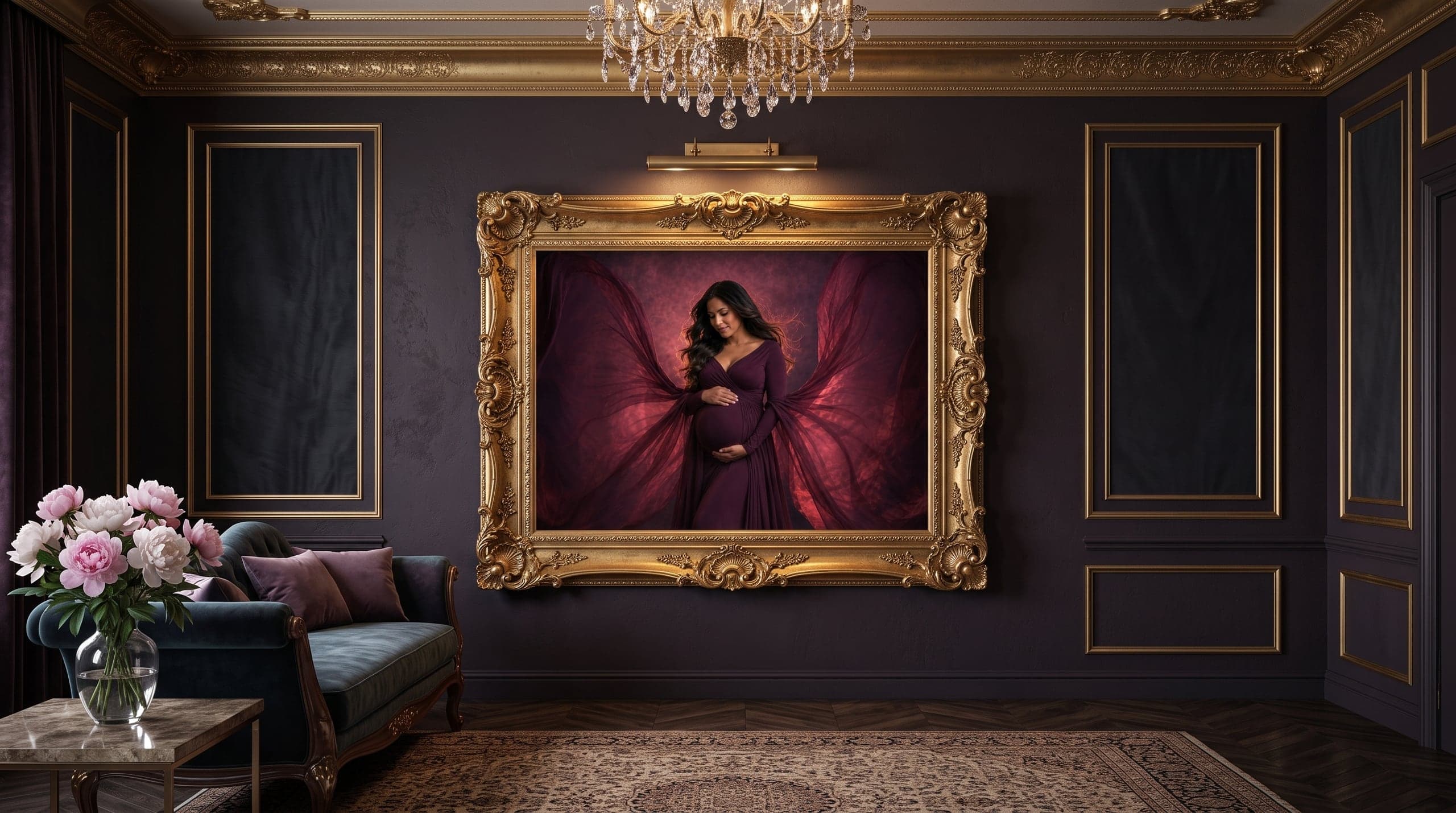
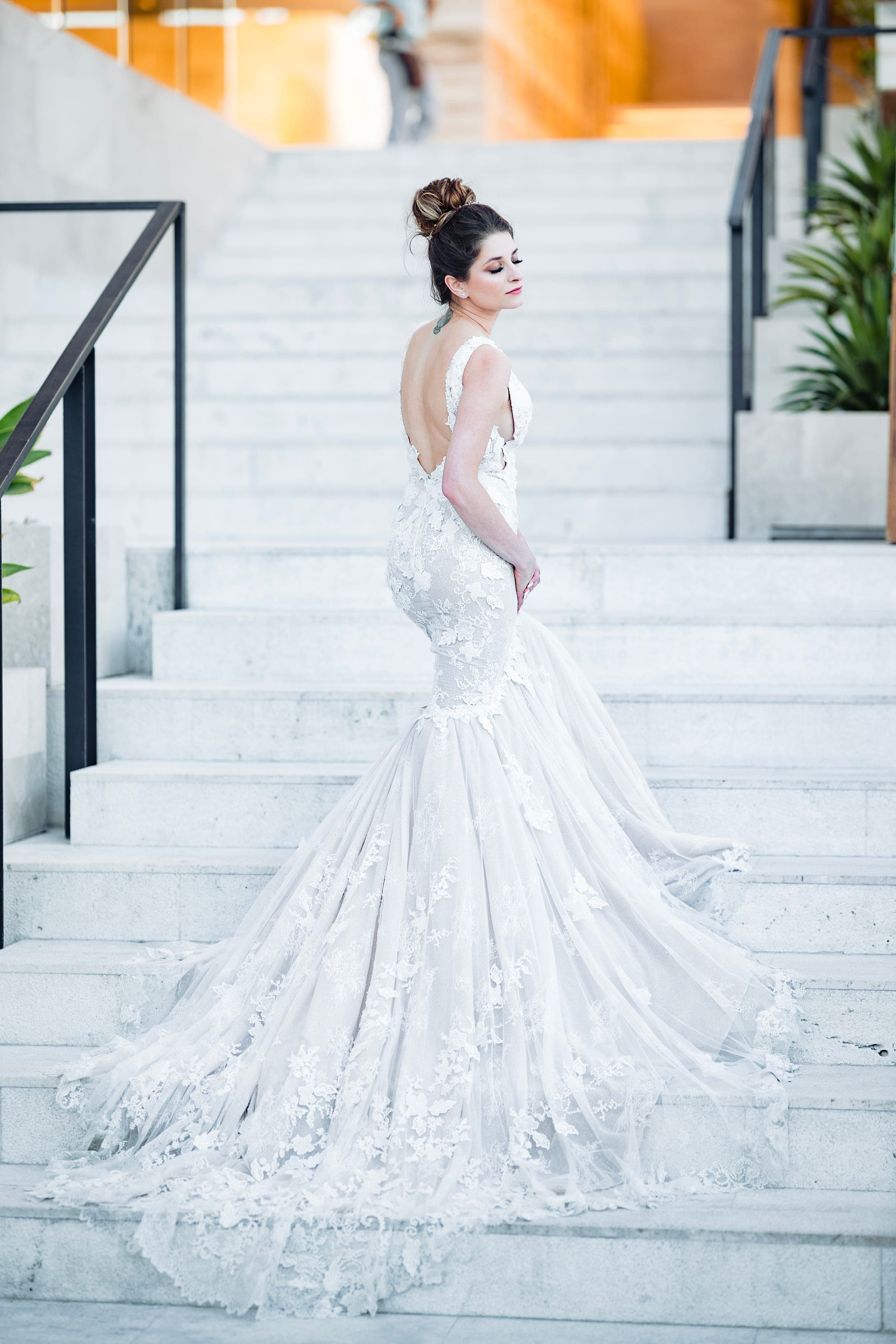
When a couple asks us about film, they are almost never asking about the whole wedding day. Nobody has ever requested a film first look, a film cocktail hour, or a film dance floor. What they are actually asking about is the portrait coverage: the bridal portraits, the couple's portraits, the two or three editorial frames they intend to blow up and hang over the mantel. That is the part of the day where the word film carries weight, so that is where we want to have this conversation honestly.
We used to offer analog film as a paid add-on, and we dropped it on purpose. This is not nostalgia against a photographer who still loves acetate, and it is not a brand fight. It is a direct argument about what we are willing to put between a Dallas-Fort Worth couple and the handful of portraits they will live with on the wall for the next forty years. After fifteen years, more than a thousand weddings, and work in nine countries, the math on that specific question is not close.
Thirty-Six Frames Against a Fifteen-Minute Window
Here is the problem in one sentence: your portraits are the most time-compressed part of the entire day, and film gives you the fewest chances at exactly the wrong moment. A roll holds thirty-six frames. A golden-hour portrait window at a North Texas estate is often fifteen minutes, sometimes less once the ceremony runs long and the light drops behind the tree line.
In that window we are working fast. We are adjusting your chin, fixing a strand of hair, catching a real laugh, chasing the light as it moves across your face. On digital we make the picture we see, then we make the next one, then we make forty more, and we pick the best. On film every frame is a unit cost and a calculation. Do we spend two frames here or save them for the veil shot? A photographer rationing frames is a photographer not fully watching you. For the frames you plan to enlarge, we would rather have hundreds of honest attempts than a rationed roll.
You Cannot Confirm the Frame While You Are Still Standing There
This is the part we will not soften, because it is the whole argument. There is no way to check a film portrait on the day. The bridal frame can be backlit into nothing, a roll can be fogged by a light leak or a bad seal, a lab can mis-develop it, and you will not know until the phone rings a week later. By then the gown is hung up, the flowers are dead, and the light that made the moment is gone for good.
A mis-developed roll is not a file we recover from a second card. It is gone. There is no raw, no backup, no second copy in a second slot. We write every digital frame to two cards at once, so if one card fails the portrait is still on the other. Film has no version of that sentence. A wedding cannot be reshot, and neither can the fifteen minutes you gave us for portraits. We are not willing to put the picture you intend to hang in a position where a lab accident is the last word.
The Lab Is a Collaborator You Never Meet
Even when a roll survives, it is not finished, because it has to leave our hands. Lab turnaround on wedding film is measured in days, often weeks. You are on your honeymoon. If a bridal portrait came back wrong, the window to fix it closed the moment you left the venue. Digital lets us know that same evening whether your portraits held, whether we need to reprocess a frame, whether the set is ready to become wall art.
Then there is scanning, which quietly changes the picture without our consent. Two labs will not scan the same negative the same way. Color, contrast, grain, even apparent sharpness shift from machine to machine and from technician to technician. That is not a style we chose, it is variance we inherited. When we hand you a wedding gallery, we want your portraits to look like us, not like whichever scanner happened to be open on a Tuesday in another city.
A Fixed ISO Dies Exactly When the Light Does
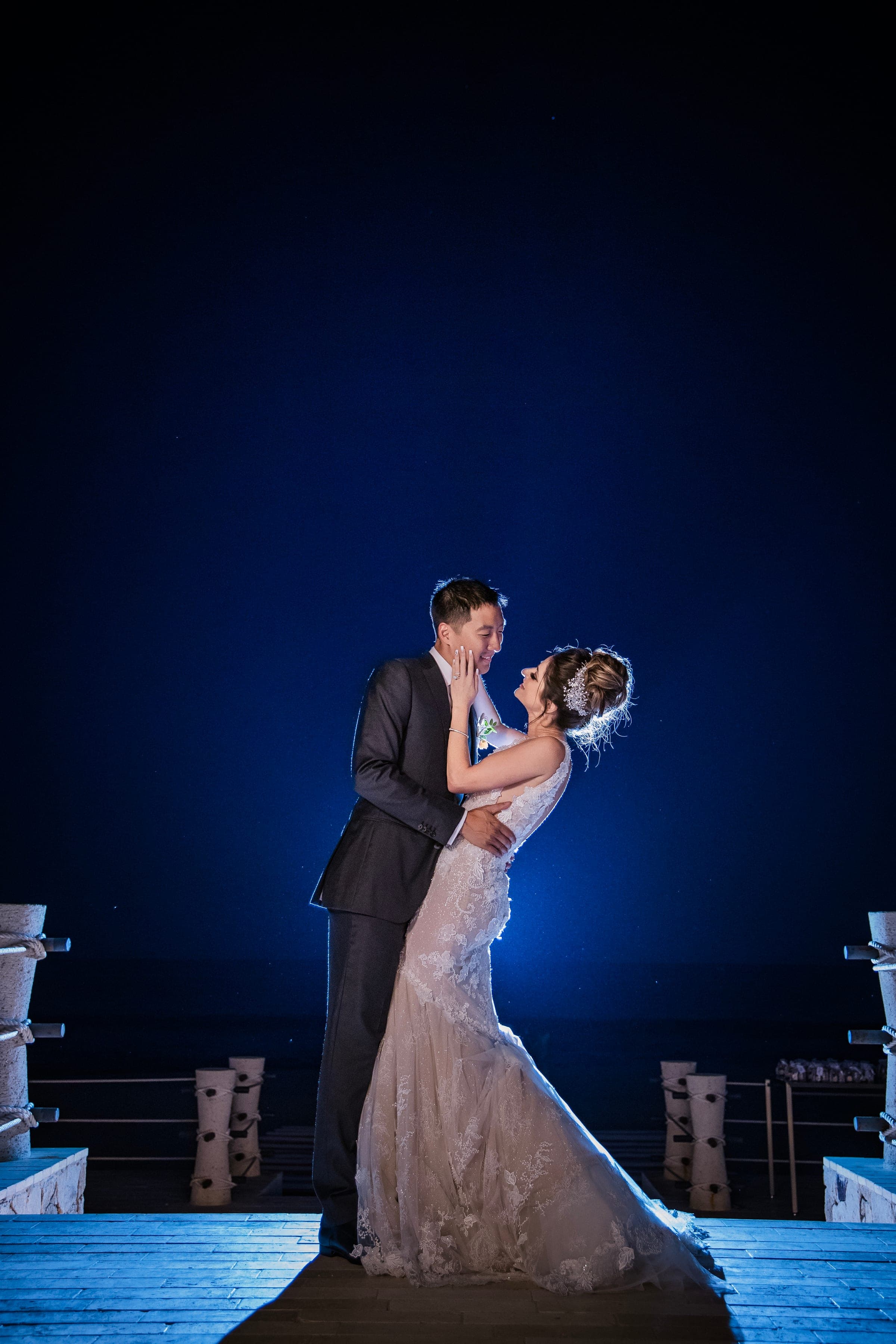
Portraits do not always happen in cooperative light. A winter ceremony in Dallas-Fort Worth loses the sun before dinner, and plenty of couples want their portraits right after the aisle, in the last soft minutes of dusk or the blue window that follows it. A roll of film is locked to one sensitivity for all thirty-six frames. You cannot turn the ISO up when the sun drops. You can push the roll and accept the grain and the color shift, you can light the scene like a set, or you can stop shooting. None of those are good answers for the frames you plan to enlarge.
Current digital sensors hold that fading light in a way film does not, at any price. That is physics, not preference, and it is why the exact moment couples describe as most romantic, that gorgeous almost-dark portrait, is the moment film is least equipped to make.
The Look Is Real, and It Is Not the Medium
We owe film one honest concession. Its highlight rolloff is genuinely lovely, and its grain structure is a look people have spent a decade trying to imitate. That is true. It is also an aesthetic, and an aesthetic can be matched from a digital raw file by someone who knows what they are reaching for: soft rolloff, muted color, warm skin, a whisper of grain. That is a description of a finished portrait, not a capture format. We can give you the film look on the picture you hang without any of the risk on the picture you cannot reshoot.
So when a couple asks whether they should hire a film photographer for their portraits, our honest answer is to hire for the portraits, not the format. Start with the finished pictures, not the camera in the bag, which is exactly the evaluation we walk through in how to choose a wedding photographer. You can see how our files hold across a full day in the wedding portfolio, and what full coverage includes on the weddings page. Couples planning in North Texas can start on our Dallas wedding photographer page, and if you want motion alongside the stills, that lives under one roof on our films page, where film means cinematography, not acetate.
Hire for the portrait you will hang, not the format it was shot on. The look is real. The risk is optional.