How to Prepare Your Dog for a Studio Portrait Session
Grooming timing, exercise, high-value treats, and the sounds that get ears up. Here is exactly how we ask you to prepare your dog for a studio portrait session.
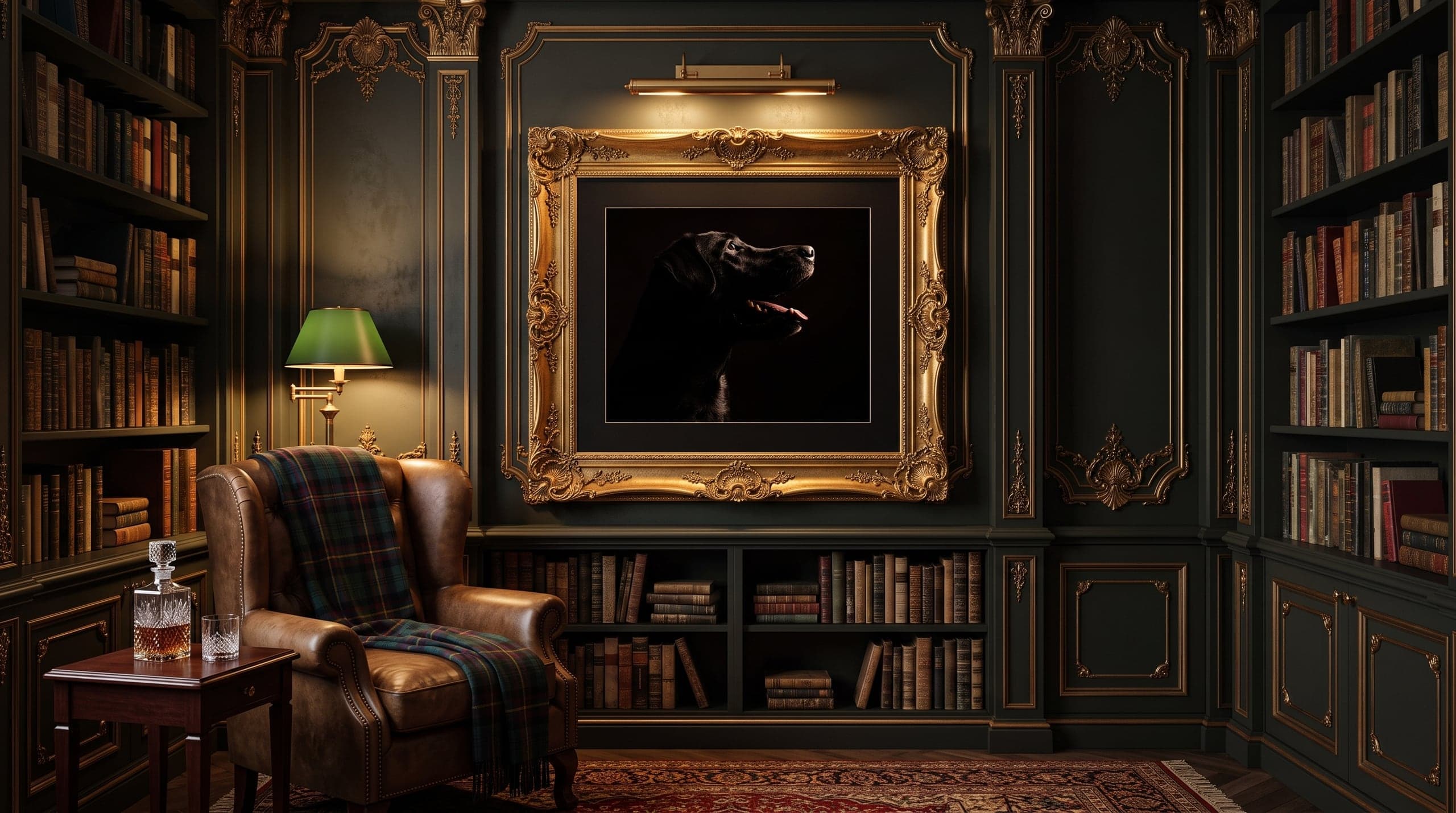
Dogs are the least predictable subjects we photograph and, honestly, some of the most rewarding. A person can be coached. A person understands the phrase hold that for one second. Your dog has no idea why four strangers are looking at him, why the room smells like an unfamiliar building, or why a light just made a soft click behind his shoulder. Everything good that happens in a dog portrait session comes from removing as many of those questions as possible before we ever raise a camera.
That is the whole argument for shooting these in the studio instead of a park. A studio is a room with no squirrels in it. We control the light, the temperature, the noise, and the exits, which means the only variable left is your dog's mood, and mood is something you can genuinely influence with about a week of small decisions. Here is what we ask of you, in the order it happens.
What a Studio Session Actually Asks of Your Dog
Not much, which surprises people. We are not asking for obedience-trial precision. We are asking for a few seconds of stillness with the head up and the eyes engaged, repeated a handful of times over the course of the session. If your dog can sit or stand in one spot for three or four seconds while somebody makes an interesting noise, we have everything we need to work with.
What we do need is a dog who is not overwhelmed. On a clean backdrop with shaped light there is nowhere for anxiety to hide. A tucked tail, a lowered head, a hard pant, a lip lick: those read instantly in a portrait, and no amount of retouching removes them. So the prep below is not about performance. It is about arriving relaxed. The same logic drives how we run every in-studio genre, which we laid out in our honest comparison of in-studio family portraits and outdoor sessions.
The Week Before: Grooming, Nails, and Nothing Fancy
Grooming timing matters more than grooming quality. A dog groomed the morning of a session often looks scalped, stiff, and slightly offended. Coats settle. Book the groomer three to five days out and you get a clean dog whose fur has relaxed back into its natural shape.
A few other things are worth handling in that same window, and none of them take long.
The week-before checklist
- Groom three to five days ahead, not the day of, so the coat can settle
- Trim nails, especially on light-coated dogs where long nails catch the eye immediately
- Clean around the eyes and muzzle so tear staining does not become the retouching bill
- Check the collar you plan to use: a worn nylon collar with a jangling county tag will show, and a simple leather one photographs beautifully
- Skip the new outfit, the bandana nobody has worn before, and the costume ears. Unfamiliar wardrobe on a dog usually reads as discomfort
- If humans are joining the frame, sort clothing early using the same rules we use for families in our guide on what to wear for family portraits
The Morning Of: Tire Them Out, Keep Them Hungry
Two levers do most of the work on session day. The first is exercise. A long walk or a solid play session an hour or two before you leave burns off the edge that turns into pacing and panting in a new room. Not exhaustion, just the difference between a dog who wants to explore and a dog who needs to. If you are driving in from Frisco or Plano to our McKinney studio, factor the drive into that math, because twenty minutes in a crate after a hard run is a fine decompression.
The second lever is appetite. Feed a light breakfast or skip it if your vet is fine with that, because a hungry dog is a motivated dog and treats are our entire vocabulary. A dog who just ate a full bowl has no reason to care what is in our hand.
One more practical note for Texas summers: come in with a dog who has already cooled down. Heavy panting is the single most common reason a coated dog looks tense in an otherwise perfect frame. Park close, keep the car cool, and give us five quiet minutes inside before we start.
Bring the Sounds and Snacks We Cannot Fake
We keep treats and squeakers in the studio, but yours are better, because your dog already has opinions about them. The goal is a small arsenal of high-value, novel triggers we can burn through one at a time. Every noise works once or twice before a dog decides it means nothing, so variety is the actual asset.
Bring soft, smelly, tiny treats (cheese, freeze-dried liver, chicken) rather than big biscuits that take thirty seconds to chew. Bring the one squeaky toy that lives in a closet and gets pulled out rarely. Bring a towel if your dog gets damp or muddy on the way in, and bring a second human if you have one. A helper who can hold a leash, block a doorway, and hand us treats while you stand in the frame changes the pace of the whole session.
Also tell us the truth about your dog when you book. Reactive to men in hats. Terrified of tile floors. Deaf in one ear. Cannot be off leash near an open door. None of that is a problem for us, and all of it is a problem if we learn it in the room.
How We Work Once You Are Inside
We start slow on purpose. Your dog gets to walk the set, sniff the backdrop, find the water bowl, and hear one or two light pops before anything is expected of him. That acclimation is not wasted time, it is the reason the pictures work later. We shoot on non-slip surfaces, we keep our voices low, and we shoot in short bursts with breaks in between, because a dog who gets a rest earns another good round.
Leashes are not a limitation. We photograph plenty of dogs on leash and remove the lead in post, so nobody has to gamble on a stay near an open door. And if your dog only gives us four excellent seconds of eye contact all session, that is four seconds more than we need. You can see how the rest of the visit is structured, from session to design, on our portrait experience page.
A tired dog, a hungry dog, and a squeaker he has never heard before. That combination has saved more portraits than any camera we own.
Puppies, Seniors, and What Happens After
Puppies and senior dogs deserve different plans. A twelve-week puppy has roughly a fifteen-minute attention span and needs frequent breaks, so we shoot fast and accept that the best frame may come in the first five minutes. A senior dog may need help onto a posing surface, shorter standing sets, and a session built around lying down, which frankly makes some of the most tender portraits we create. Tell us the age and the mobility honestly and we build the session around it.
Then comes the part that matters most. These sessions exist to become something you hang, not a folder of files. Every session carries a published session fee, and you can see how the pricing works on our investment page, including twelve-month interest-free financing on artwork. We design the finished pieces together at an in-person reveal, where you see the images large before you choose anything, and we walk you through sizing on a real wall. If you want the case for that approach, we made it in why printed wall art matters, and you can see the print and canvas options on our wall art page.
Dogs give us about a decade, sometimes a little more. Prepping well for one afternoon is a small price for a portrait that outlives the leash by the front door.