Why the Canon R3 Is STILL My Favorite Camera for Wedding Photographers in 2026
Canon has shipped the R1 and the R5 Mark II since, and the R3 is still the camera in my hand every wedding day. A long-term, real-wedding review of the EOS R3 in 2026.
When the R3 launched, I put my hands on one, shot with it, and made a video asking the only question that matters: is it worth the hype? That was years and hundreds of thousands of frames ago. Canon has since shipped the R1 and the R5 Mark II, and both are remarkable cameras. One of them is literally sitting in my bag as a backup body.
And on every wedding day, the camera in my hand is still the R3. This is the long-term follow-up to that original review: what held up, what the newer bodies changed, and why, for wedding photography specifically, the R3 is still my favorite camera you can put in a working photographer's hands in 2026.
The Original Review
My original hands-on review from when the camera launched is below. Everything I liked then, the ergonomics, the viewfinder, the eye autofocus, the battery, turned out to be exactly the things that matter over a long season of weddings. What I could not have told you then is how well it would age.
The Sensor: Still the Best Files in the Lineup
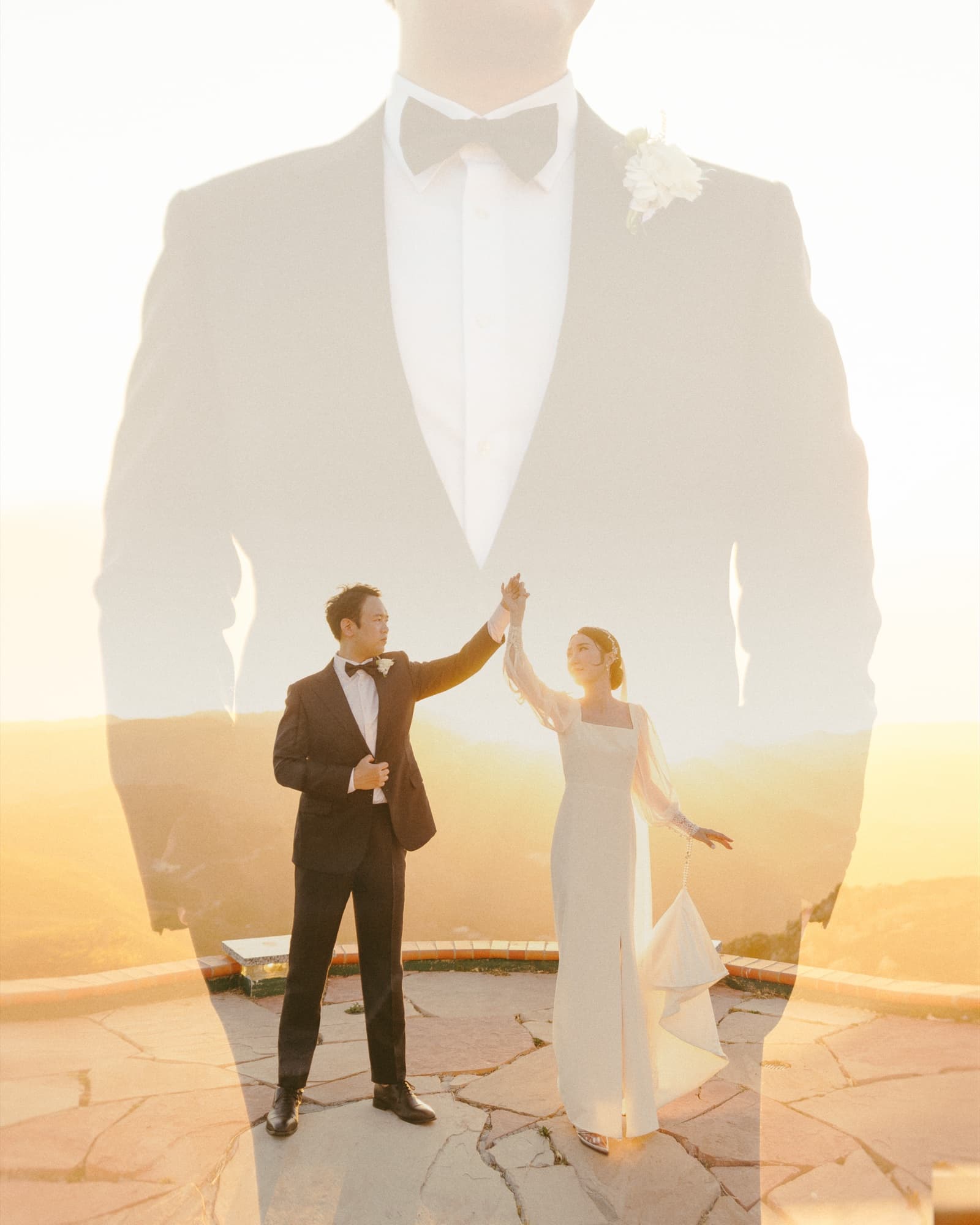
The spec-sheet crowd read 24.1MP at launch and called it low. After years of shooting it, I will tell you that for wedding work the resolution is one of the R3's best decisions, and not just for the file economy. Those bigger photosites are why, to my eye, the R3 still pulls the highest dynamic range and the best low-light files of any Canon body I own, including the newer ones. I can bury a backlit dress in shadow, expose for a molten sky, and lift the couple three stops in post without the file falling apart. And at the ISOs where receptions actually live, the R3's files stay clean in a way that still surprises me on the cull.
A wedding is thousands of frames in a day, across two shooters and multiple bodies. The R3's files are big enough for albums, wall art, and every crop we actually deliver, and small enough that culling is fast, storage is sane, and the buffer never taps you on the shoulder.
The stacked sensor is the other half of the story. The readout is fast enough that I live on the silent electronic shutter all day, processionals, vows, quiet moments in churches that would have echoed with a mechanical shutter, with none of the banding or rolling-shutter smearing that made early electronic shutters unusable at receptions.
The spec sheet, translated to a wedding day:
- 24.1MP stacked back-illuminated sensor, the sweet spot of dynamic range, low-light performance, and file economy
- Silent electronic shutter with readout fast enough to trust for an entire ceremony
- Blackout-free EVF, you watch the moment while the camera fires
- Eye-detect and Eye Control AF that hold a moving subject wide open
- Integrated grip with the LP-E19, one battery for a full wedding day
- Dual slots, CFexpress plus UHS-II SD, with weather sealing that has survived beaches, dust, and rain
The Autofocus: Good Enough, and That Is the Point
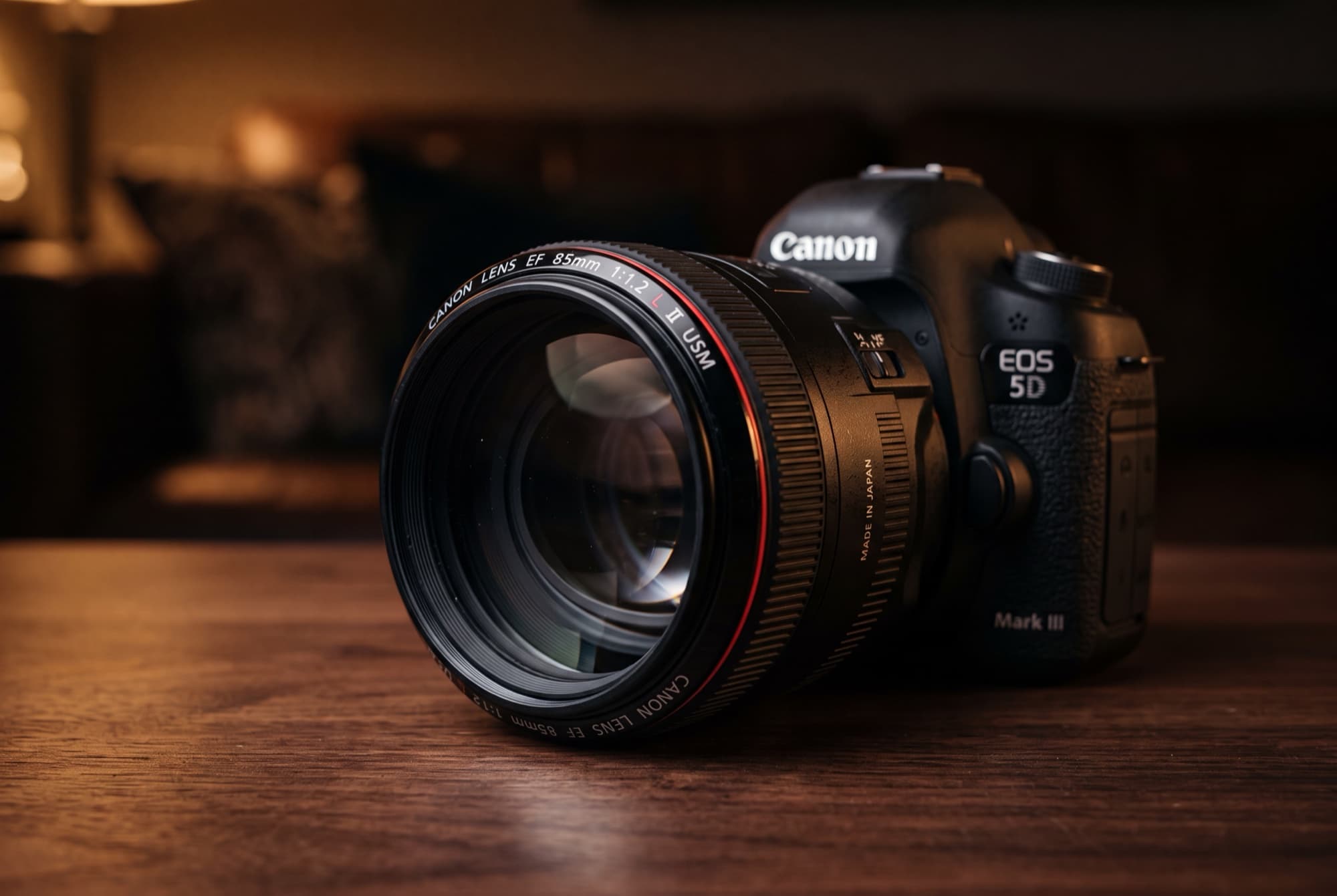
Let me be honest about where the R3 sits in 2026: the R1 and the R5 Mark II carry Canon's newest autofocus systems, and on paper they are ahead. In practice, the R3's autofocus is good enough, and at this level, good enough means it has never once cost me a moment. Eye-detect AF on this body locks a wedding dress in wind, a first dance in near darkness, a bride walking toward you up an aisle, and it does not let go. I wrote an entire review years ago about fighting focus on an 85mm f/1.2, missing the plane at f/1.2 because I breathed wrong. You can read that battle in my Canon 85mm f/1.2L review. Bodies like the R3 are what ended it.
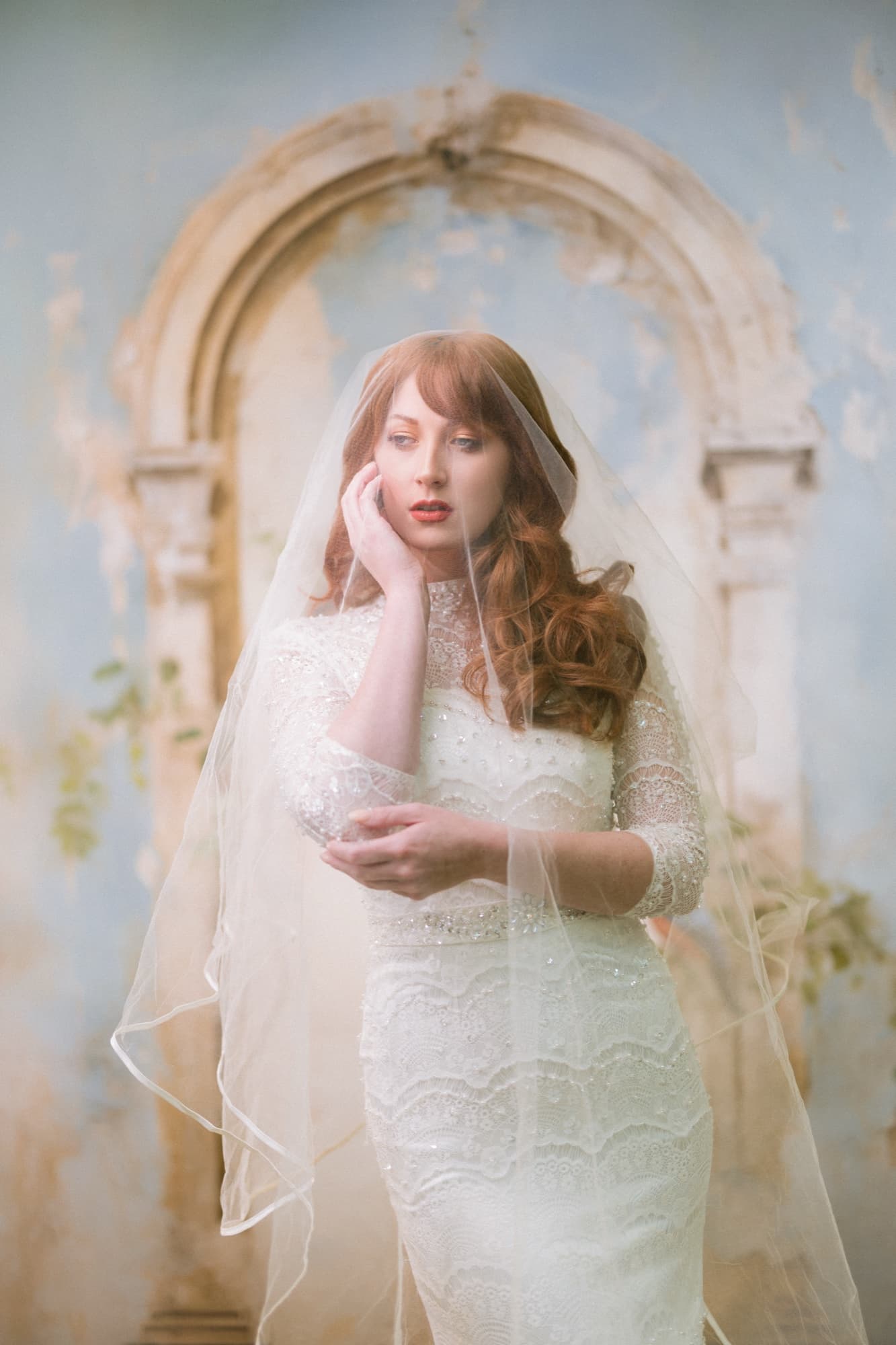
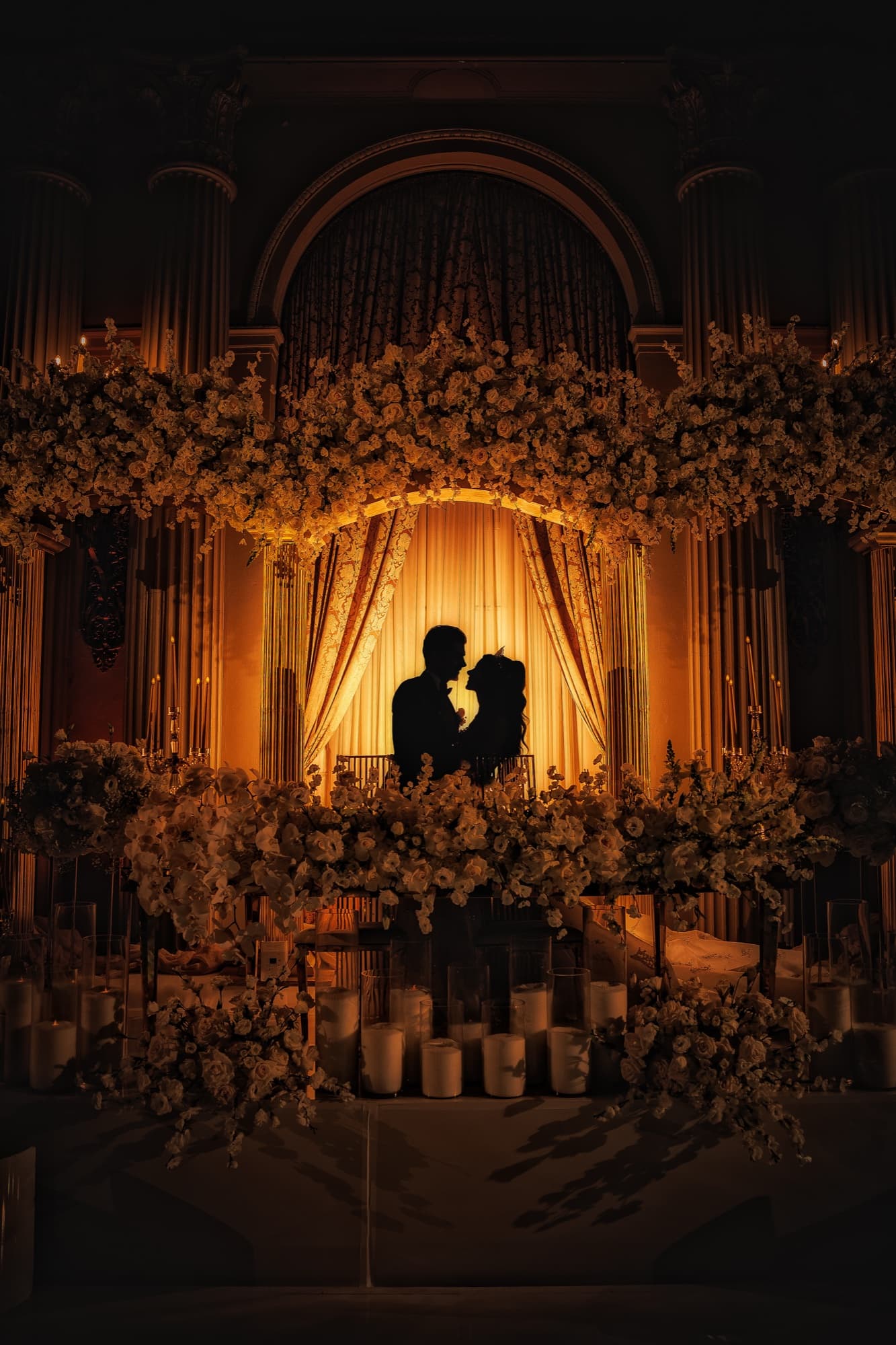
The blackout-free viewfinder matters more than any spec suggests. During a bouquet toss or a hora, you are watching the moment continuously while the camera fires. You stop reacting to what already happened and start composing what is about to. The frame below is the R3 finding a sharp eye through a layer of tulle, wide open at f/1.2, exactly the shot the old DSLRs made me sweat for.
The Best Overall Size of Any Pro Body
This is the claim I will defend hardest: the R3 is the best-sized professional camera Canon has ever made. It is lighter and leaner than the flagship class, but the grip is integrated, so it balances correctly with real glass on it for twelve hours, shoots verticals without contorting your wrist, and never needs a bolted-on accessory grip working itself loose mid-reception. Smaller bodies feel great in a shop and wrong at hour nine of a wedding with a 70-200 up front.
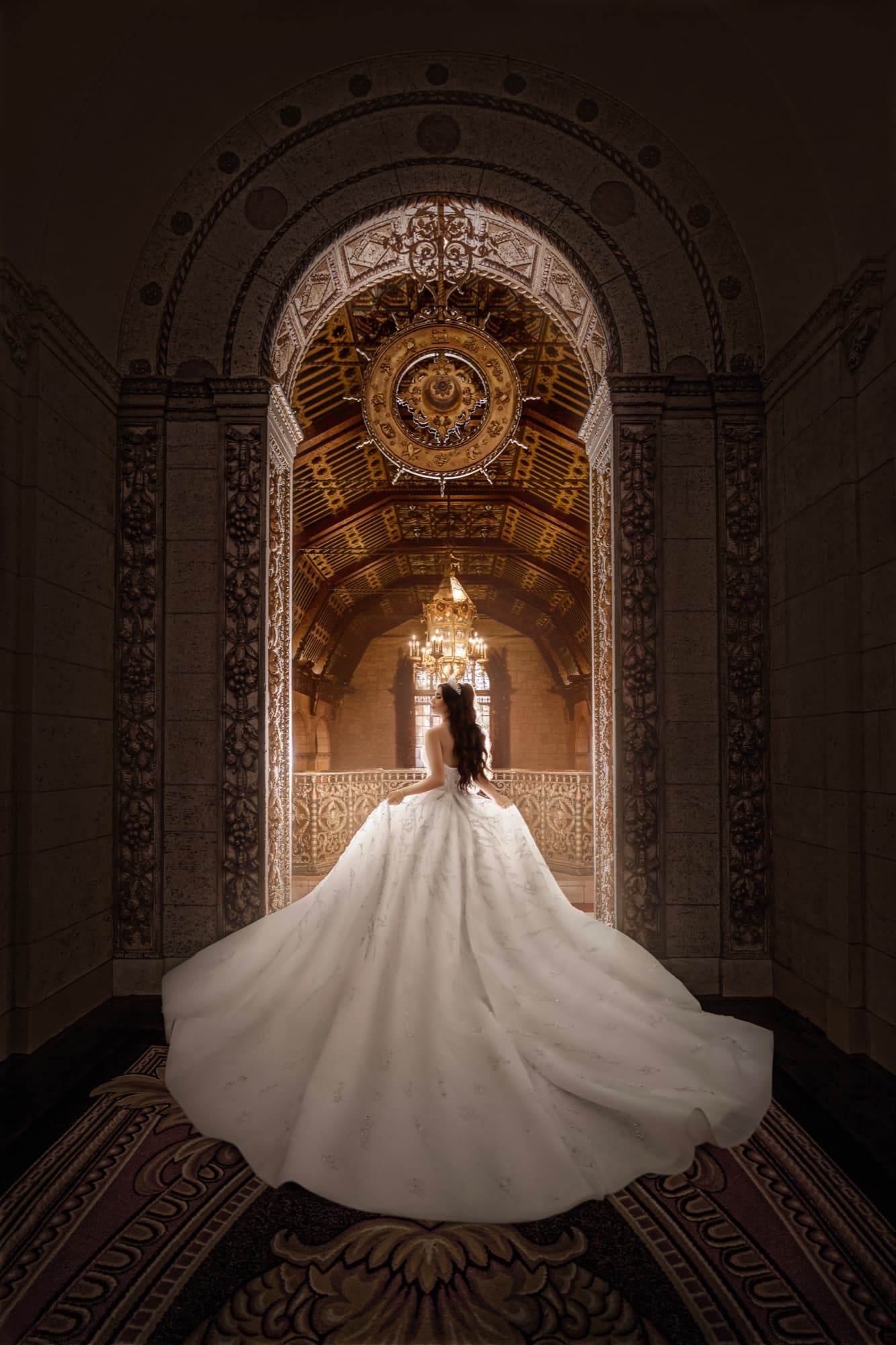
And the battery seals it. The LP-E19 is the same cell Canon's flagship bodies have used for years, and on the R3 it is genuinely a shoot-all-day battery, one battery, a full wedding, without a thought. Add dual slots, CFexpress for speed and UHS-II SD for redundancy, and weather sealing that has been through beach ceremonies, desert dust, and more than one rainstorm. In years of wedding days, this body has never once been the reason we missed a frame.
But the R1 and R5 Mark II Exist
They do, and I own the R5 Mark II. It is our backup body, and our studios shoot it as well. It is a spectacular camera, and its 45MP files are the right answer for commercial work and for anyone who crops aggressively. But for the volume of a wedding, double the resolution means double the storage, slower culls, and no visible difference in a finished album or a 40x60 on a wall.
The R1 is Canon's flagship and it is a monster, built for the sidelines of a World Cup. If someone handed me one I would not complain. But the R3 gives wedding shooters the parts of that flagship formula that actually show up in our work, the stacked sensor, the dynamic range, the grip, the battery, at a price that, in 2026, has become one of the quiet bargains in professional photography. That is why the answer in the title has not changed: newer bodies have come and gone through this studio, and the R3 is still my favorite camera to hand a wedding photographer in 2026.
Where the R3 Sits in Our Kit
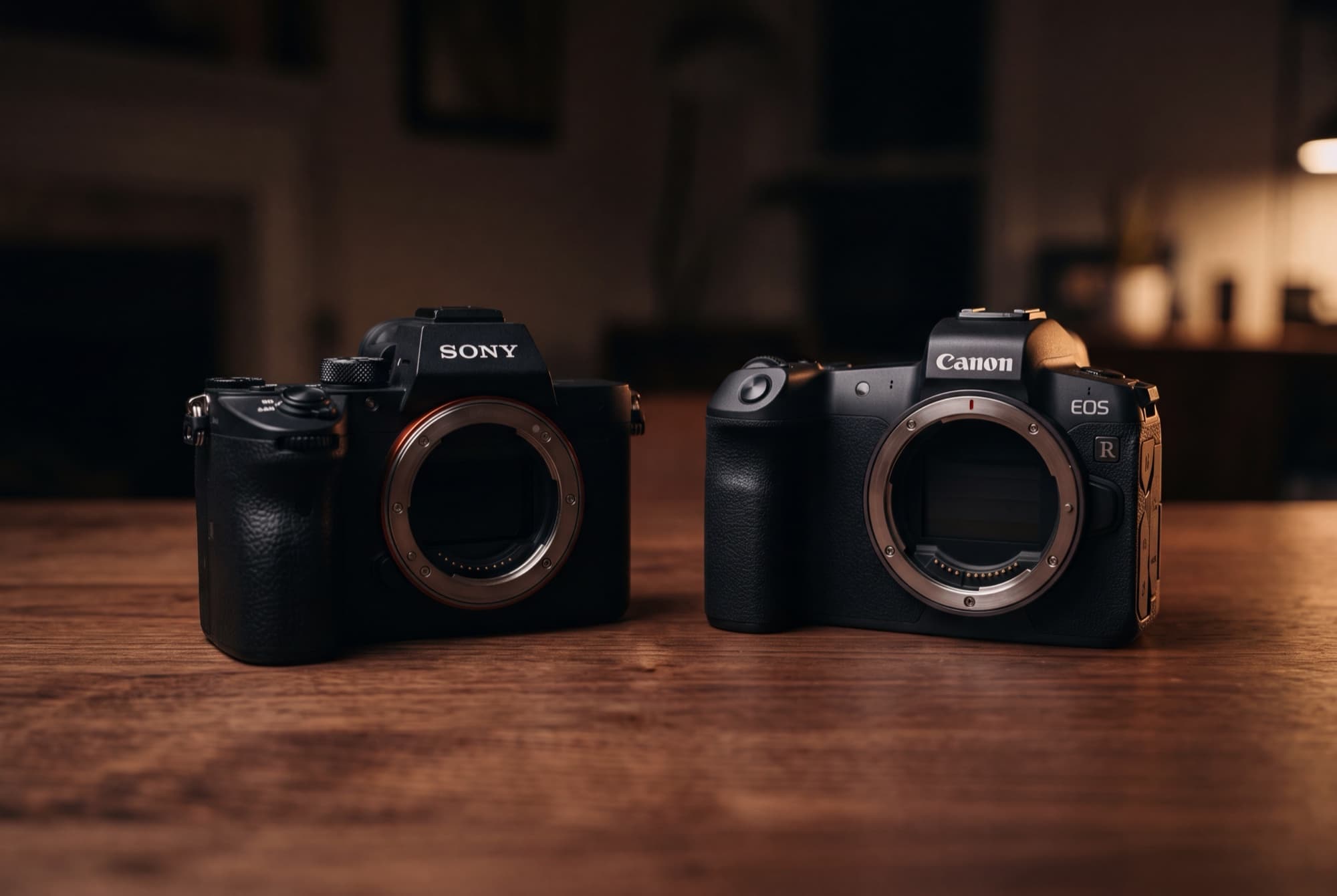
Context matters in any gear opinion, so here is the Canon system this review lives inside. The R3 is my A-camera for stills. Everything else has a role, and none of them has taken the wedding-day slot from it. Why Canon at all? That story is in Why We Switched From Sony Back to Canon.
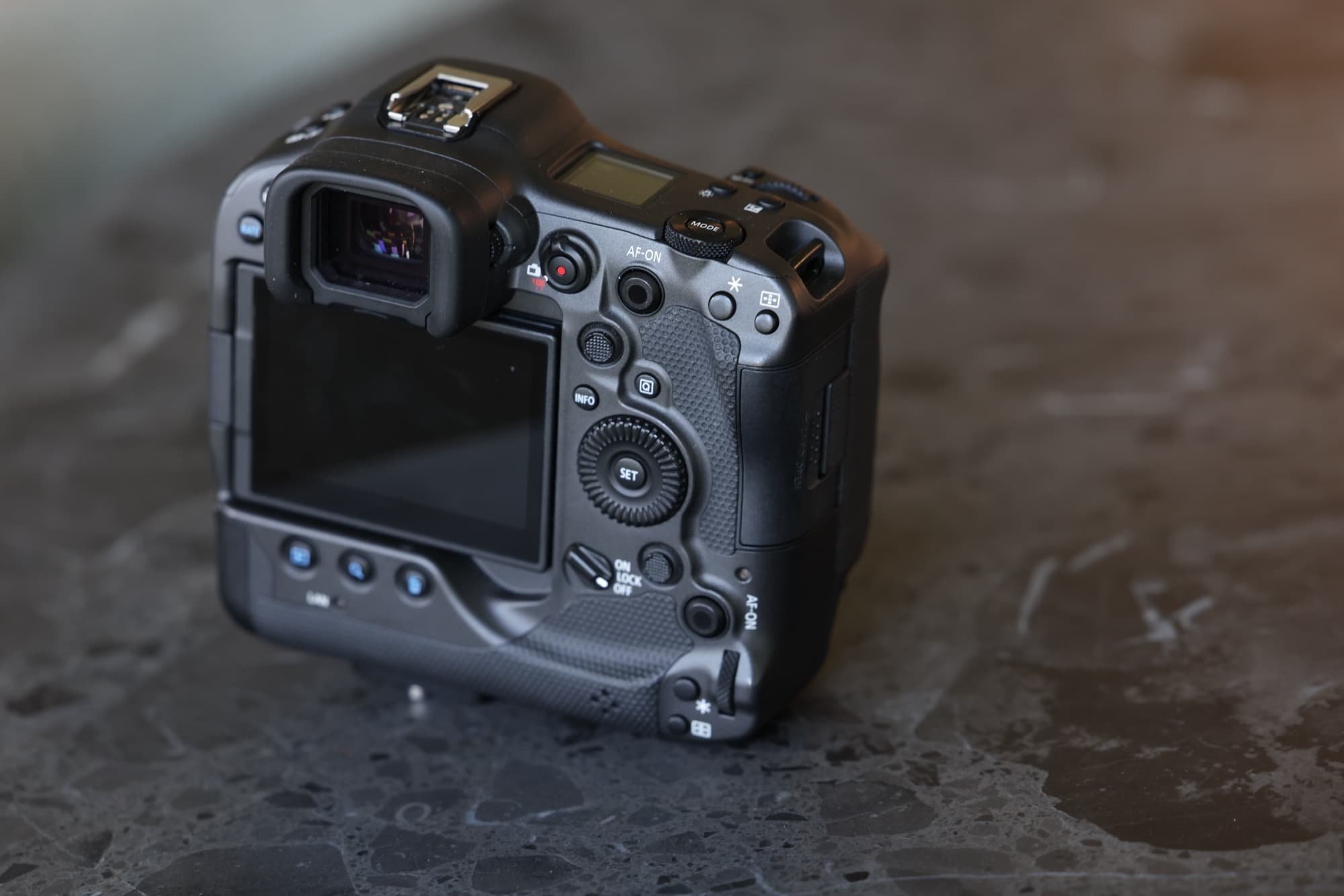
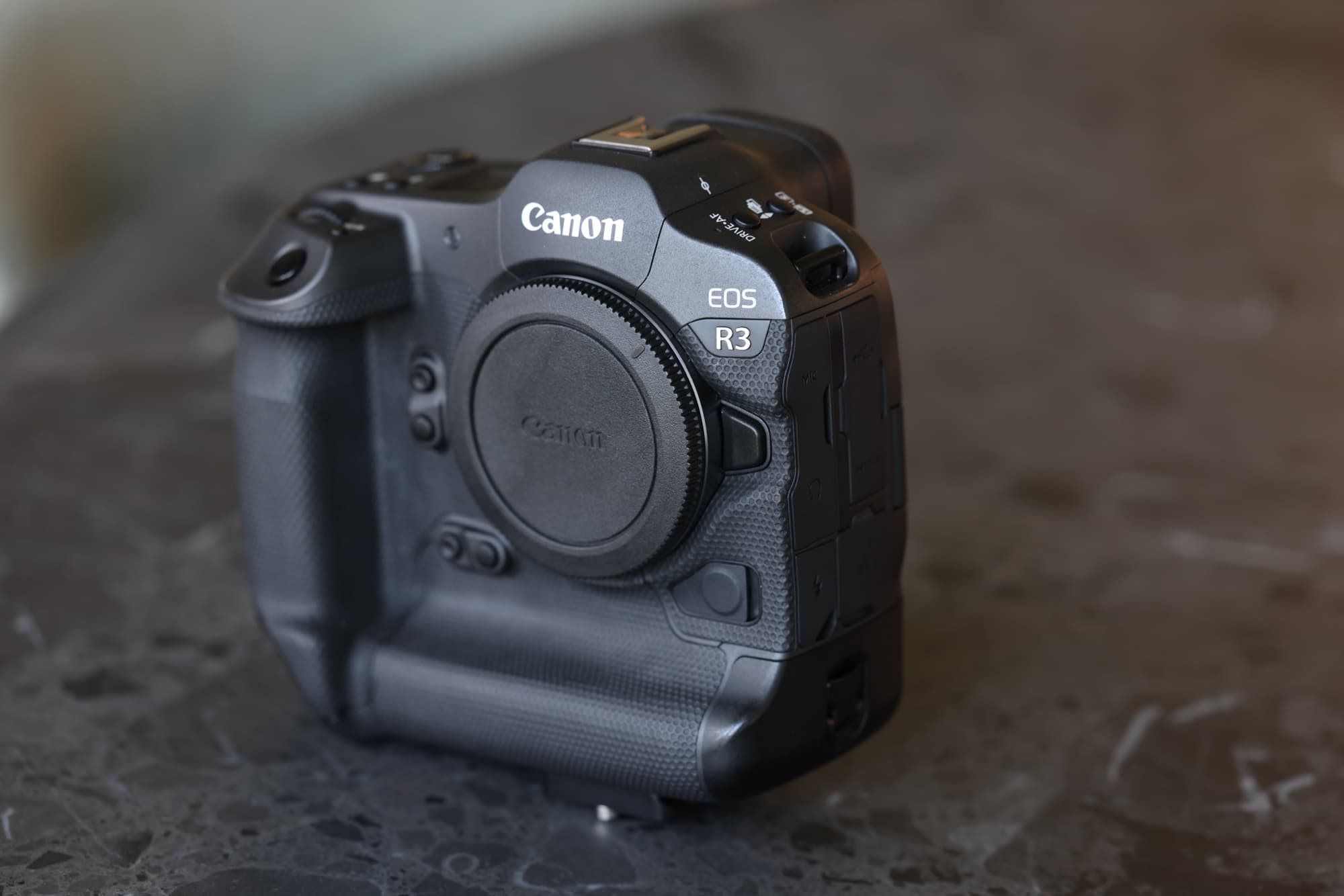
The body in these product photos is my actual R3, photographed this week, and if you look closely you can see the wear of a few hundred wedding days on it. Fittingly, the camera I photographed it with was the R5 Mark II, the backup earning its keep.
The current Canon kit at our studios:
- Canon EOS R3, the A-camera for every wedding
- Canon EOS R5 Mark II, backup body, also shot by our studio teams
- Canon EOS R6 Mark II, our California studio body
- Canon EOS R5 C, C80, and C70, the cinema side for wedding films
- RF 15-35mm f/2.8L, RF 28-70mm f/2L, RF 24-70mm f/2.8L, RF 70-200mm f/2.8L, RF 100mm f/2.8L Macro