After the Wedding: Galleries, Timelines, and Artwork
The wedding is one day. The part that follows runs months, and almost nobody explains it before you book. Here is the honest map of previews, editing, the reveal, and what your photographs finally become.
The last dance ends, somebody hands you a to go box of cake, and the valet line at the hotel thins out. For you, the wedding is over. For us, a different clock starts, and it is the part of the process almost nobody explains during a consultation.
Couples ask great questions about the day itself. Hours, second shooters, first looks, rain plans. Then they sign, get married, and discover that the next several months are a total mystery. When do we see anything. Why does editing take that long. What is a reveal. Do we have to order an album, and if we do, when.
So here is the honest map of the after. It is written from our side of the desk, after fifteen years and more than a thousand weddings, and it applies whether you got married in a Malibu canyon, a downtown Los Angeles landmark, or a ballroom four time zones away.
The First Week: Backups, Not Edits
The first thing that happens to your wedding photographs has nothing to do with color or retouching. It is redundancy. Cards come out of the bodies, files get copied to multiple drives in more than one physical place, and nothing gets formatted until those copies verify. This is the least glamorous hour of the entire job and the single most important one.
If you take one question from this article into your vendor calls, make it this one: where do my files live between the wedding and the gallery. A studio that answers instantly has a system. A studio that pauses has a laptop.
Somewhere in that first stretch you will usually see a small preview set. Previews exist for a reason beyond impatience. They give you something to post, something to send your parents, and something to look at while the real work happens quietly in the background.
Why Editing Takes the Time It Takes
A ten hour wedding with two photographers generates thousands of frames. The first pass is the cull, which is not deleting bad pictures so much as choosing between forty nearly identical frames of the same toast and keeping the one where your dad's face turns.
Then comes color. A wedding day is a nightmare of mixed light sources: daylight through a window during preparation, warm tungsten in a church, green tinted uplighting on a dance floor, our own strobes layered on top of all of it. Making those look like one continuous story instead of six different afternoons is the work. Consistency across an entire gallery is the difference between a professional edit and a preset.
Retouching follows, then a final review of the whole set in sequence, the way you will actually look at it. And all of this happens while other weddings are being photographed, which is why every reputable studio quotes a delivery window rather than a delivery date. Read yours in the contract and ask what the studio's actual turnaround has looked like this year, not just what the paperwork allows. We answer our common timeline questions on the FAQs page.
If you also booked film, the two crews are editing in parallel. Having photo and film under one roof matters here as much as it did on the day, because the storytelling decisions get made by people who were standing next to each other during your vows.
A gallery is not a pile of files. It is a sequence, graded and ordered so the day reads the way it felt.
The Reveal, and Why We Do It in Person
Here is where our process diverges from the download link model, and it is deliberate.
When your gallery is ready, we bring you into the studio and show the images projected, large, in order, with the lights down. Most couples cry. Everybody sees photographs they never would have found scrolling a browser tab at eleven at night, because a phone screen flattens everything and an inbox turns your wedding into an errand.
The reveal is also a working session. We design your album and your wall pieces with you in the room, choosing spreads, trimming duplicates, deciding which frame deserves to be twenty four inches wide instead of four. Doing that together takes one evening. Doing it over email takes four months and usually ends with nothing ordered at all.
We host reveals at both of our studios, in Valencia for our Los Angeles couples and in McKinney for North Texas. Couples coming in from the Westside or the South Bay, pick an evening and let traffic be somebody else's problem. Destination couples who genuinely cannot get to a studio are handled remotely, but if you can be in the room, be in the room.
Album Design, Step by Step
An album is not a print of your gallery. It is an edit of an edit, usually sixty to a hundred images that carry the arc of the day, laid out so pages breathe instead of shouting.
Our design process runs in a predictable order, and knowing it removes most of the anxiety.
The bindings themselves are worth understanding before you choose. We wrote about our heirloom books, including the blacksmith bound albums with hand forged metal, because the difference between a real archival album and a photo book is not a marketing distinction, it is a hundred year one.
Cost is the question nobody wants to ask out loud. Our wedding numbers are published on the investment page, and artwork and albums can be financed over twelve months interest free, which is the reason most of our couples end up with the collection they actually wanted rather than the one they could pay for in a single month.
How an album comes together
- You choose favorites at the reveal, and we flag the frames that carry the story
- We build a first design, sequenced chronologically with room for full bleed moments
- You review the layout and request changes, usually swaps rather than rebuilds
- Cover material, metal or leather, foil or debossed text, and page thickness get selected
- The book goes into production, hand bound, and takes several weeks to come back
- We inspect it before you ever see it, and reprint anything that is not right
The Part That Ends Up on the Wall
Somewhere around the reveal, most couples realize they have never actually printed a photograph of themselves. We understand why. Screens are free and walls are a commitment.
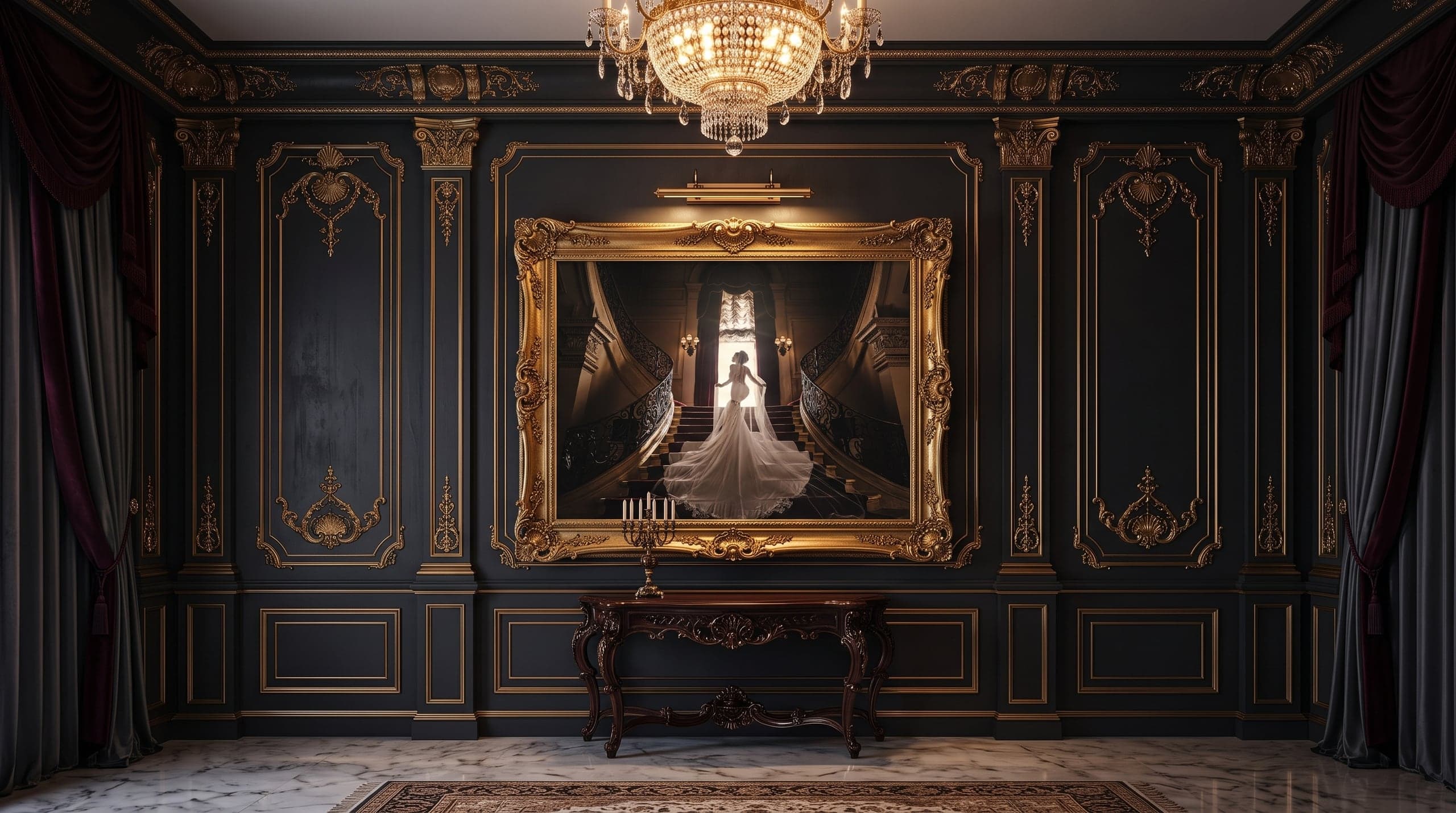
But a marriage lives in a home, and a house with nothing personal on its walls is a rental with better furniture. One large piece over a sofa does more emotional work than four hundred files on a drive, and we made that argument at length in why printed wall art matters. The formats we work in, from framed fine art prints to acrylic and canvas, are shown across our artwork pages.
A useful rule: go one size larger than feels reasonable. Every couple who has ever hesitated between the thirty inch and the forty inch piece has wished, once it was hanging, that they had gone bigger.
Your Simple After Checklist
Confirm the delivery window in writing before the wedding, not after. Download and back up your files the week they arrive, in two places, one of them not in your house. Schedule the reveal within a month of the gallery going live, while the day is still vivid. Decide on the album before your first anniversary, because a book designed while you still remember the toasts is a better book.
Then stop thinking about it. The whole point of a studio that handles the gallery, the film, the album, and the artwork in one process is that you get to be a newlywed instead of a project manager.
If you are still choosing a photographer and want to know what our after looks like in detail, tell us your date and we will walk you through it before you sign anything.