Ballroom, Estate, or Chapel? Choosing Your DFW Venue Type
Ballroom, estate, or chapel: how the three big DFW venue archetypes shape the light, the timeline, and the photographs, and how to pick the one that fits your day.
Almost every couple who books us in North Texas starts in the same place: a browser with fifteen tabs open and a spreadsheet that keeps growing. The venues all look beautiful in the photos, which is exactly the problem. What is harder to see from a gallery is how a room actually behaves on a wedding day, how the light moves through it, and how a floor plan either protects your timeline or quietly sabotages it.
We photograph weddings across Dallas-Fort Worth from our McKinney studio, and after a lot of years and a lot of rooms, we have come to think of the region's venues in three broad families: the ballroom, the estate, and the chapel. Most of DFW's best venues are really one of these three, or a blend of two. Understanding the archetype before you fall for a specific address makes the whole search calmer. If you want the shortlist we point couples to, start with our best DFW wedding venues roundup, then read this for the why behind the choice.
The Ballroom: Controlled, Grand, Weatherproof
A ballroom is the venue type that never flinches at the forecast. Think of the hotel and grande-dame rooms downtown: high ceilings, chandeliers, sconce light you can dial in, and a footprint built to move a few hundred guests through cocktails, dinner, and dancing without a single step outdoors. When August is running 102 degrees or a spring line of storms is rolling through, the ballroom does not care. That reliability is worth a great deal, and it is why classic Dallas rooms like The Adolphus and the celebration-scale halls at the Gaylord Texan stay booked.
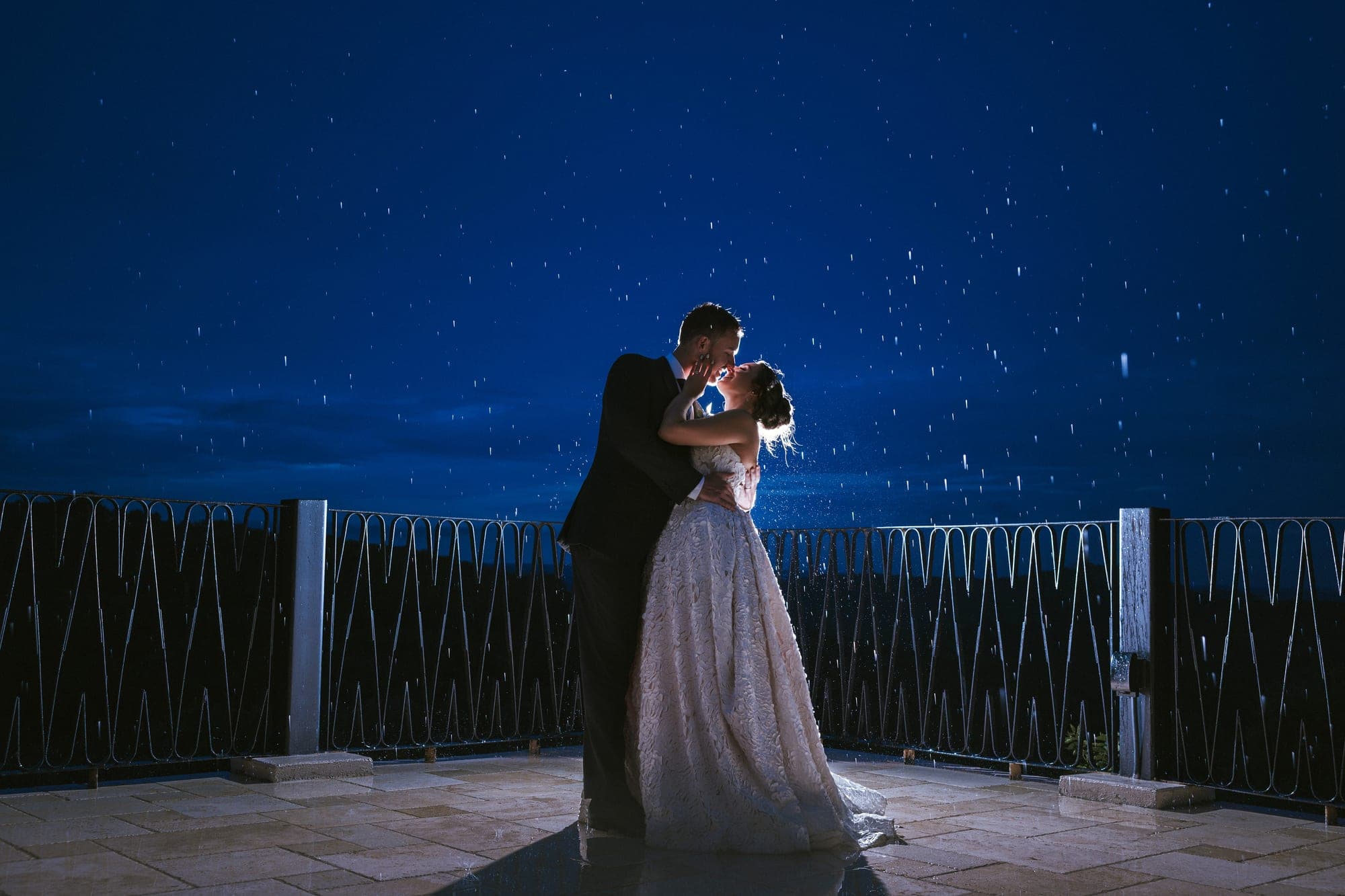
The tradeoff is that a ballroom hands you very little natural light and very few sweeping outdoor frames on its own. That is not a problem, it is just a plan. We light ballrooms deliberately, using the venue's own chandeliers and architecture as the backdrop and adding our own light to sculpt faces and separate the couple from a busy room. The photographs read rich and cinematic, but they come from craft, not from a golden-hour lawn. If you love a formal, black-tie feeling and you want zero weather anxiety, this is your family of venues.
The Estate: The Property Is the Portrait
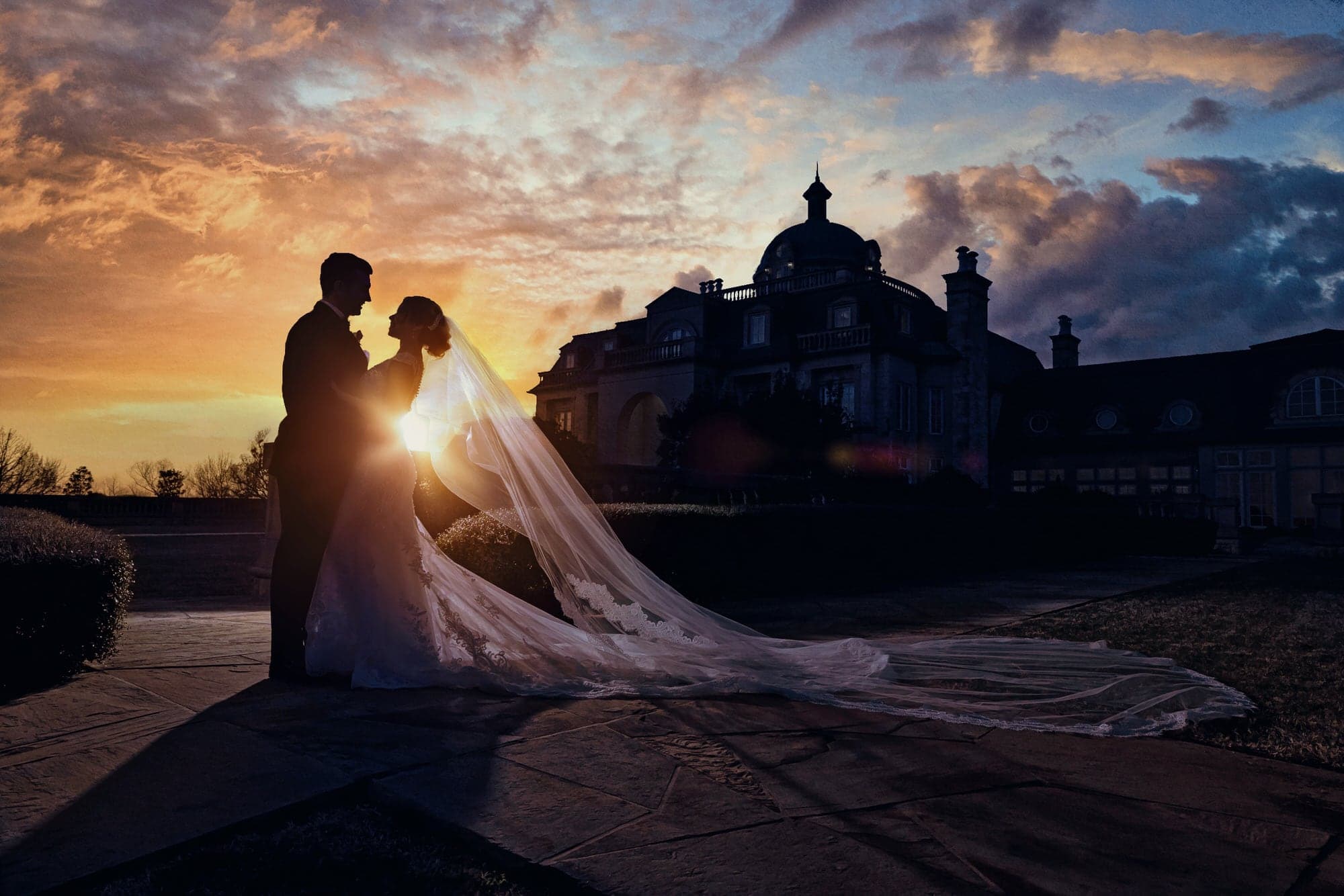
An estate wedding is the opposite bargain. Here the property itself is doing the heavy lifting: grand staircases, formal fountains, manicured lawns, columns, and long sightlines that photograph like architecture because they are. North Texas has quietly become one of the strongest estate corridors in the country, from the French-inspired palace at The Olana on its private lake to the sprawling grounds at Knotting Hill Place north of Fort Worth.
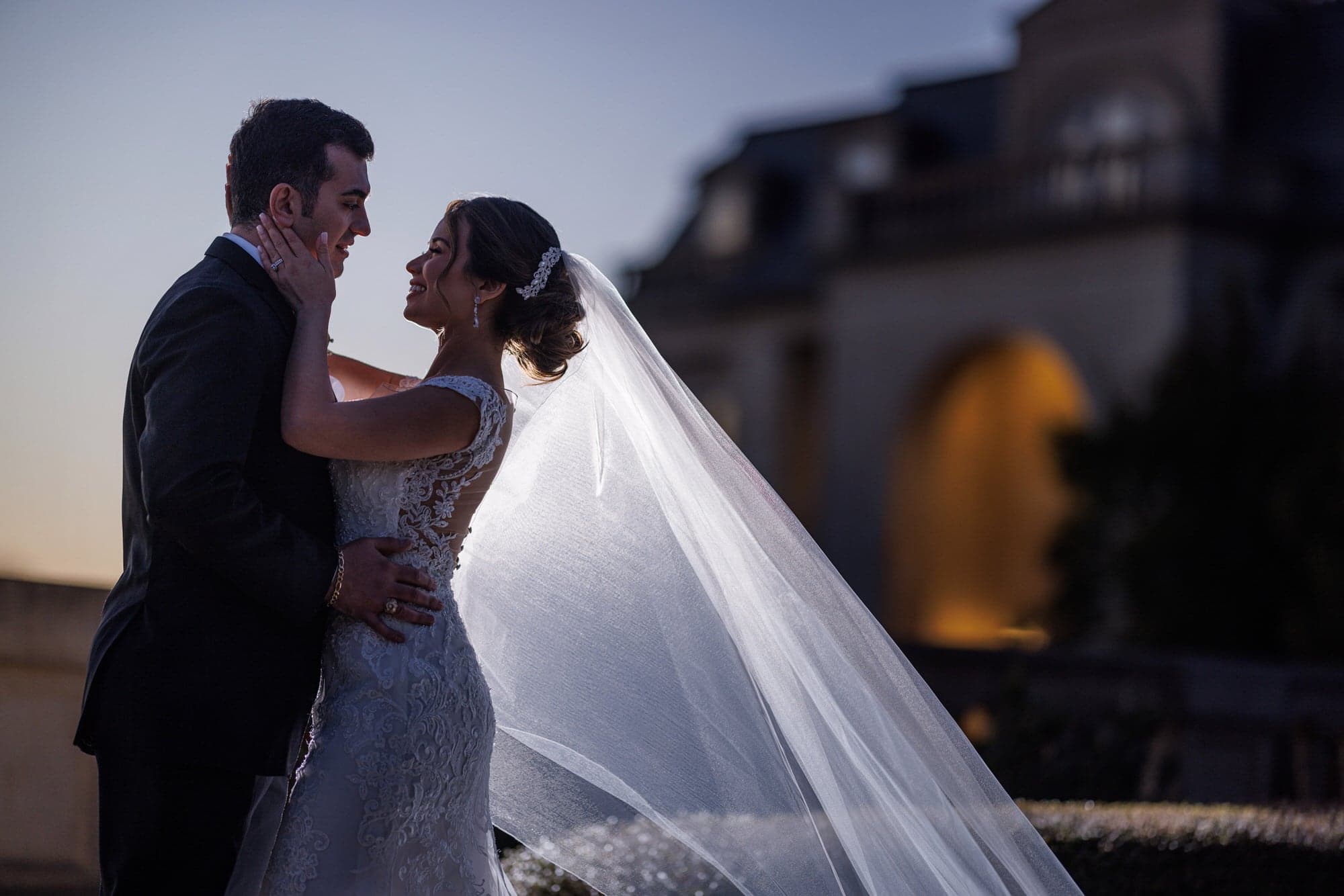
Estates give you the most dramatic couple portraits of the three types, especially in the last ninety minutes before sunset and into blue hour, when a lit facade glows against a deep sky. The catch is that estates ask more of your timeline. The grounds are large, moving a full bridal party between the staircase, the fountains, and the lawn takes real minutes, and the best exterior frames are hostage to the weather and the clock. A good estate venue always has a strong indoor backup, and we plan for both every single time. If your dream photographs are the ones where the building and the light are the whole story, an estate is built for you.
The Chapel: Ceremony First, Light Built In
The chapel is the most focused of the three. These are purpose-built ceremony spaces, often with tall windows, warm wood, and an aisle designed to be walked and photographed. Around McKinney and Frisco especially, the dedicated chapel venue is a North Texas signature, and many pair a beautiful sanctuary with an adjoining reception hall so the whole day lives on one property. Our Bella Donna Chapel guide walks through one of the region's favorites.
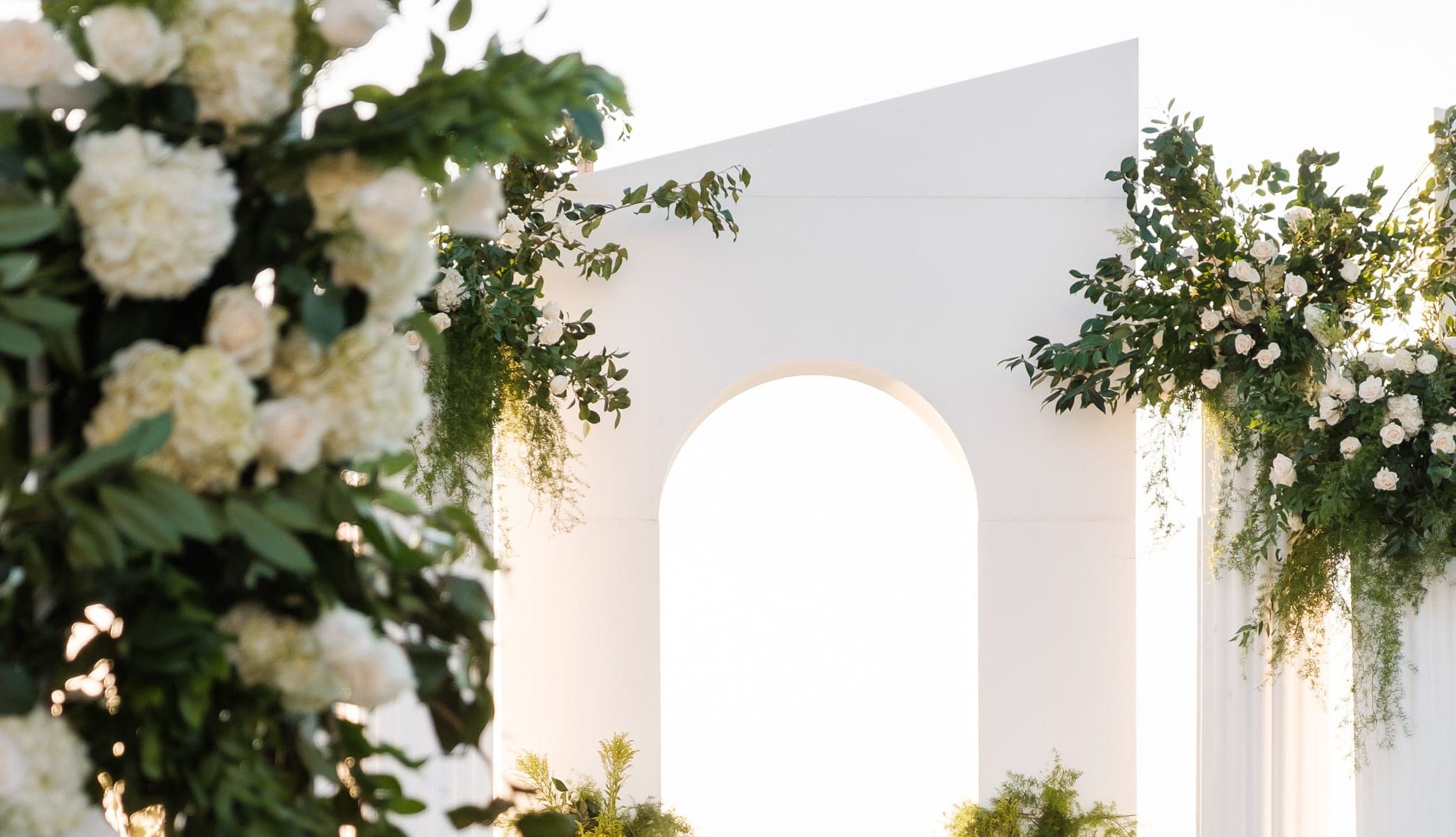
What a chapel gives you is a ceremony that looks intentional: symmetrical, architectural, and often flooded with soft window light that flatters everyone. What it does not always give you is a lot of outdoor portrait real estate or a large footprint for a sprawling reception, so chapels frequently work best when the ceremony space and a separate reception venue are paired. For couples who want the ceremony itself to be the visual centerpiece of the day, and who love a light-filled, traditional aisle, the chapel is hard to beat.
How to Actually Decide
When couples get stuck between the three, it usually comes down to a handful of honest questions. These are the ones we walk through together before anyone signs a venue contract, because the answers point you to a type far faster than another night of scrolling.
Questions that point you to a venue type
- How much does weather anxiety matter to you? If the answer is a lot, lean ballroom or an estate with a strong indoor backup.
- Are your dream photos the couple against grand architecture, or the ceremony moment itself? Estate versus chapel.
- Do you want everything on one property, or are you comfortable moving guests between a ceremony site and a reception?
- How formal is the feeling you want? Ballrooms skew black-tie, estates skew garden-grand, chapels skew classic and intimate.
- What is your guest count, and does the room hold it comfortably at dinner and on the dance floor, not just on the tour?
- How much daylight will you actually have? Estates reward a late-afternoon ceremony; ballrooms free you from the clock entirely.
One More Thing: Blends Exist
The neat three-way split is a starting point, not a rulebook. Plenty of DFW venues are deliberate hybrids. A Stockyards property like Hotel Drover mixes estate-style grounds with weatherproof indoor rooms and a distinctly Texas character. Some estates include a chapel on the property. Some ballrooms open onto a terrace or courtyard that buys you a little outdoor light. When you find a blend you love, the archetype framework still helps: figure out which type it leans toward, and plan the photography around that strength while keeping the other as a backup.
This is also where a photographer's read on a room earns its keep. We have shot enough of these venues to know where the light falls, where the timeline gets tight, and what a space can and cannot give you before you ever walk in. Browse the full venue guide library as you compare, and use it to pressure-test whatever you are leaning toward.
Photographing Weddings Across DFW
Whichever type you land on, the goal is the same: photographs that feel like the day and hold up on a wall for decades. Ballrooms we light, estates we time to the sun, chapels we let the windows do the work. All three can produce a stunning gallery when the plan matches the room.
See more of our Dallas-Fort Worth wedding photography, read how the investment works, and when you have a venue type in mind, reach out and we will talk through the light, the timeline, and the backup plan for exactly the kind of room you are choosing. We cover all of North Texas from our McKinney studio with no travel fee anywhere in the state.