Knotting Hill Place: Planning a North Texas Estate Wedding
A photographer's read on Knotting Hill Place in Little Elm, from the grand staircase to the courtyard, and how to build a timeline that uses all of it.
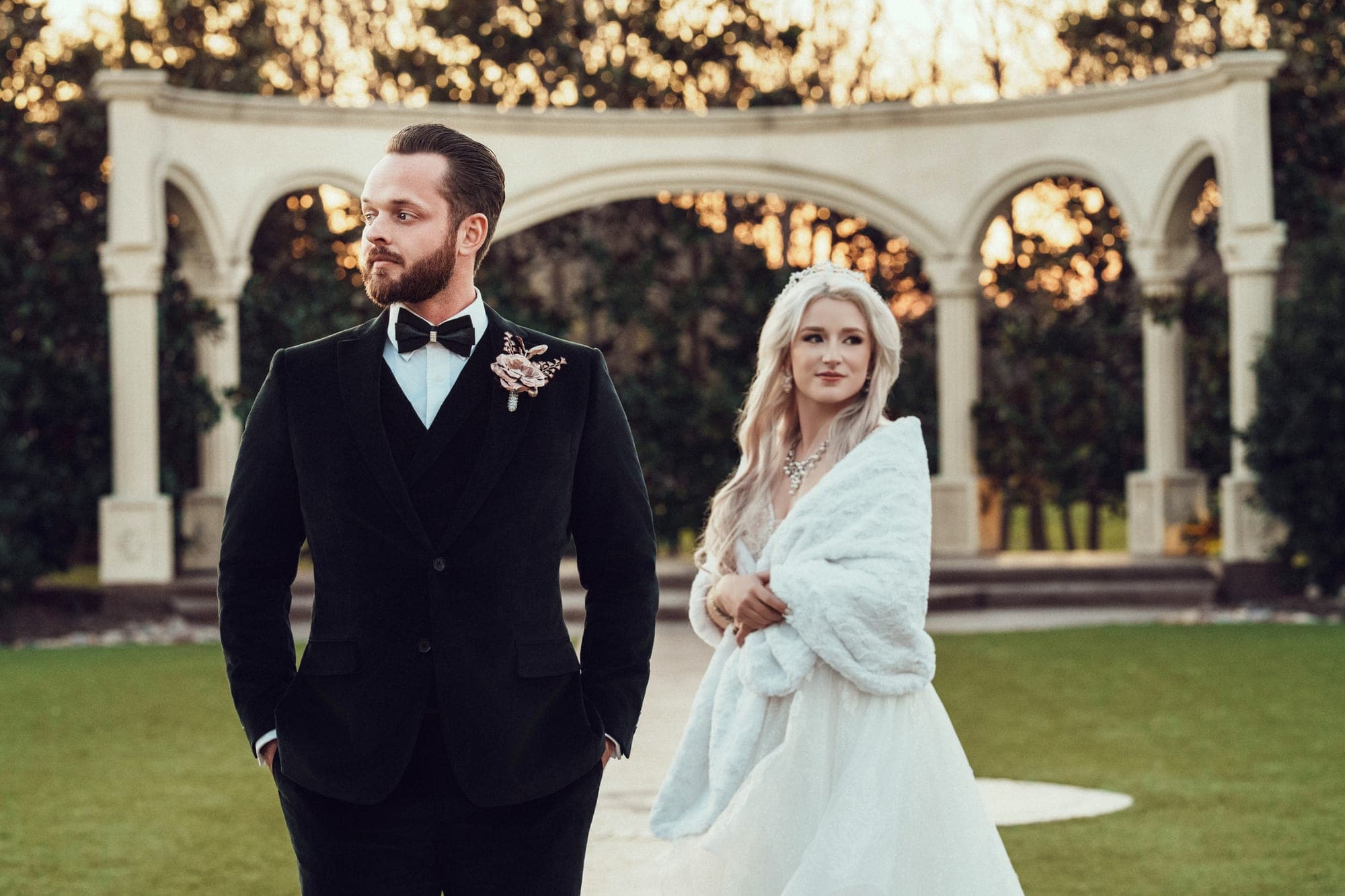
Knotting Hill Place sits on manicured grounds in Little Elm, about forty minutes north of Dallas, and it is one of those North Texas properties that was built for photographs whether or not anyone was thinking about photographs when they built it. European-inspired architecture, a grand entrance, a sweeping staircase indoors, a fountain courtyard outside, and enough open lawn to hold a full ceremony under Texas sky. If you are weighing it for your date, our Knotting Hill Place venue guide lays out the property room by room. This is the companion piece: how we would actually shoot a wedding day here, and where the hours tend to go.
We are writing this prospectively, the way we write all of our Dallas-Fort Worth venue intelligence. What follows is craft knowledge about a property like this one, the kind of read we bring to any estate before the first frame.
What Knotting Hill Place Actually Is
The short version is an all-in-one estate. Like a lot of the well-run North Texas properties, Knotting Hill Place is built to hold the entire day at a single address: getting-ready suites, a ceremony space, cocktail areas, and a reception hall all inside a short walk of each other. That matters more than couples expect, because a day that never requires a car is a day where the timeline stays calm and nobody arrives to the reception already worn out.
For photography, the appeal is variety in a small footprint. You get grand interior architecture (the staircase and the chandeliered ballroom), formal exterior architecture (the facade and the courtyard), and softer natural settings (the lawns and the tree line) without ever losing more than a few minutes moving between them. That is the same argument we make for a D'Vine Grace Vineyard wedding up the road, and it holds here too.
Reading the Light on the Property
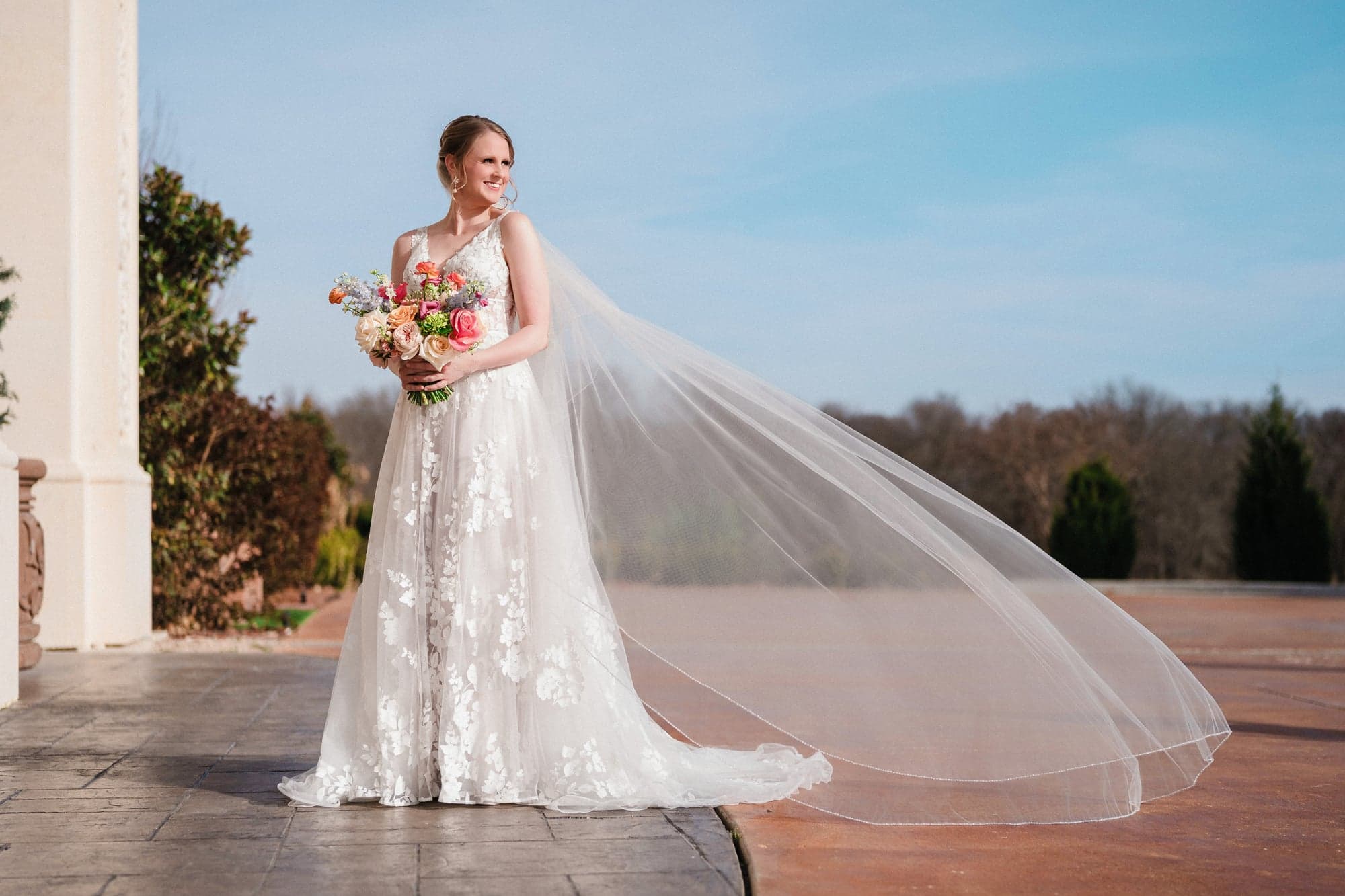
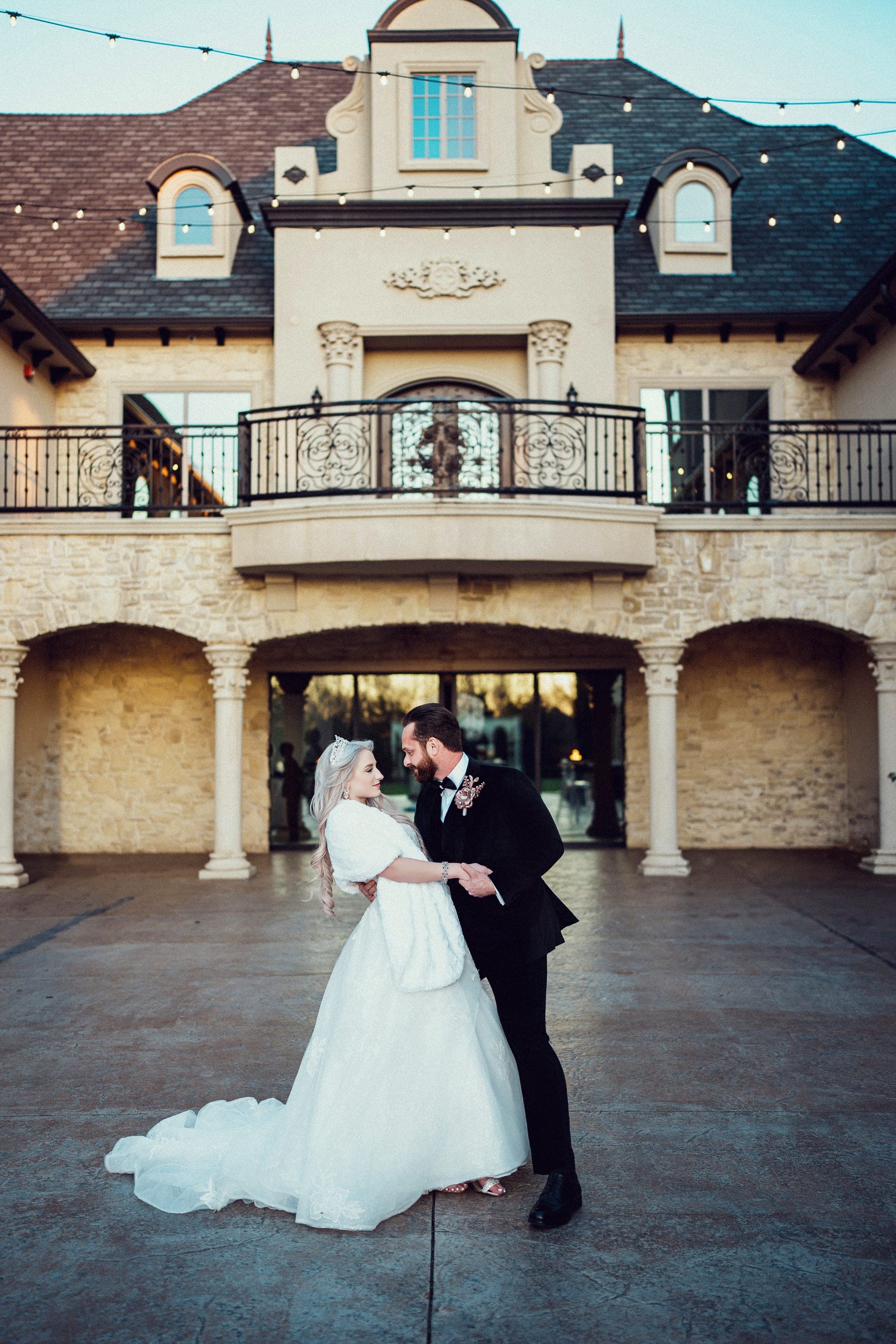
The single most useful thing you can know before an estate wedding is which way the building faces and when each setting goes soft. On a property like this, the front facade and the courtyard tend to be the marquee exterior settings, and both do their best work in the last hour before sunset, when the light comes in low and warm and skims across the stone instead of falling straight down on it.
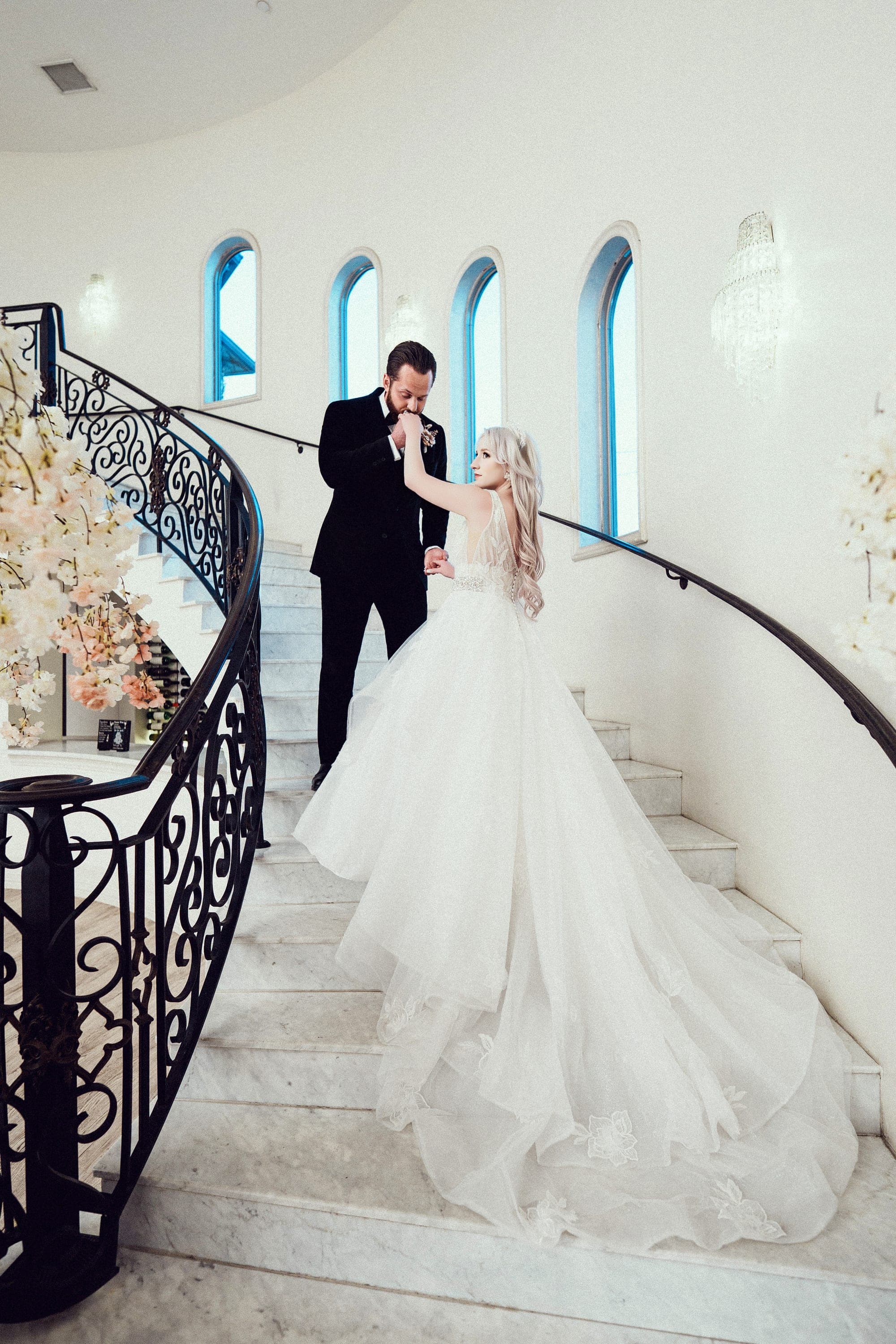
Midday in North Texas is a different problem. From late spring through early fall the sun is high and hard, and the smart move is to work in open shade, under the arcade, along the tree line, or on the shaded side of the building, and let the harsh light stay in the background where it belongs. The interior staircase is the exception that saves you: it stays beautifully lit all day and gives you a formal, weather-proof setting no matter what is happening outside.
The Settings We Would Build Around
Every estate has a handful of spots that carry the gallery. On a property built like Knotting Hill Place, we would plan the day around these:
Where the pictures tend to come from
- The grand staircase, for first-look and formal couple portraits with real architecture behind them
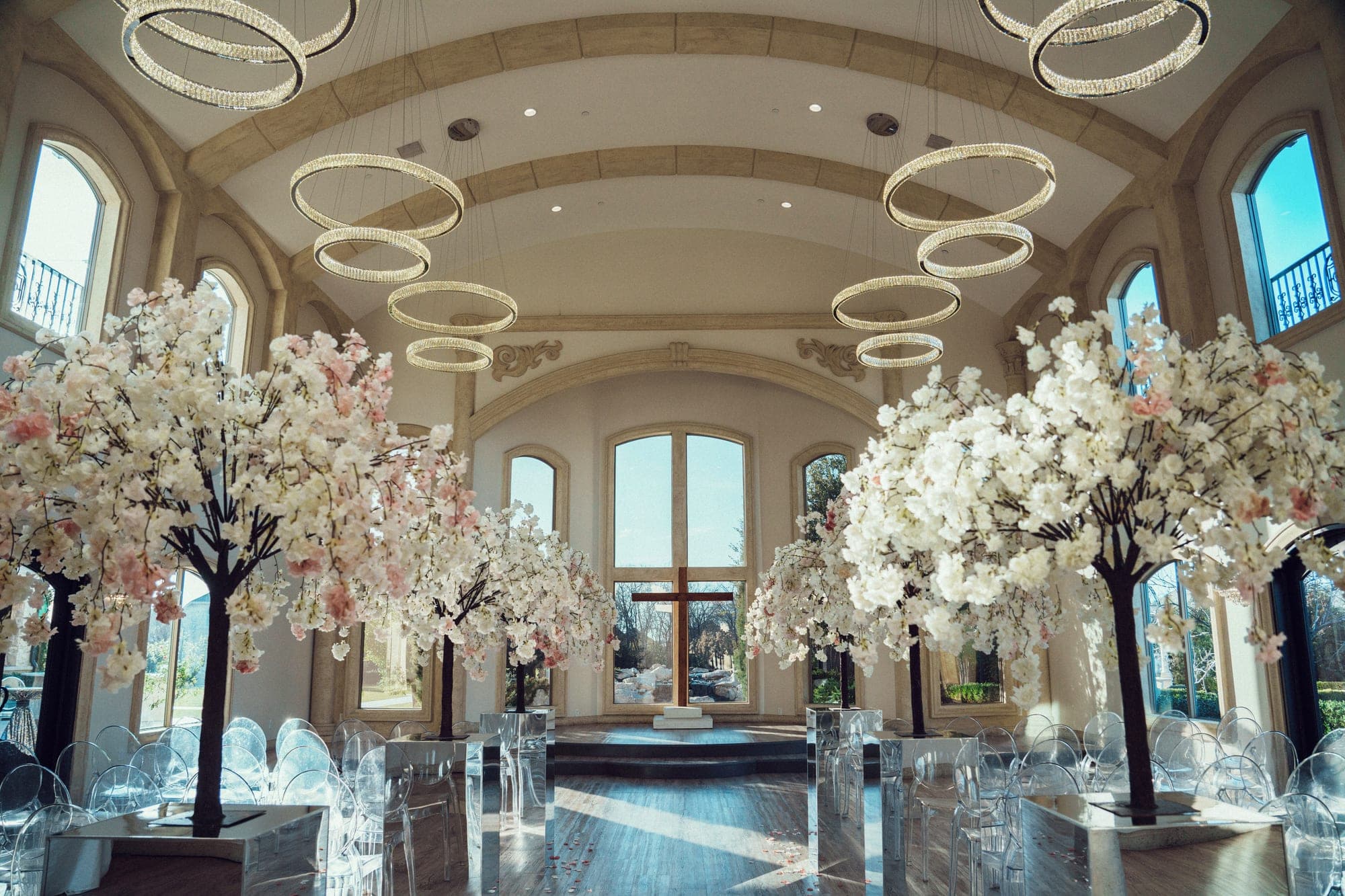
- The ballroom, for detail and reception frames under the chandeliers
- The front facade and entrance, for wide, dramatic portraits at golden hour
- The courtyard and fountain, for softer, symmetrical setups
- The open lawn and tree line, for the ceremony and for natural-light couple work
- Getting-ready suites with good window light, where the gown and details get photographed early
Building the Timeline
The decision that changes an estate wedding more than any other is the first look. Seeing each other before the ceremony lets us finish the couple portraits, the wedding party, and most of the family groups before guests ever arrive, which means the hour after the ceremony is not fighting the entire cocktail hour for time. On a property this photogenic, that bought-back time is what lets you actually use the staircase, the courtyard, and the lawn instead of picking one.
If a first look is not for you, the fix is simply more buffer. We would protect a dedicated sunset block on the calendar, ten or fifteen minutes pulled out of the reception when the light is at its best, and step outside for the frames that only happen once a day. That single block is often where the cover image of the whole gallery comes from.
A working rule for estate days: build the timeline backward from sunset, not forward from the ceremony. Everything downstream gets easier once the light is accounted for first.
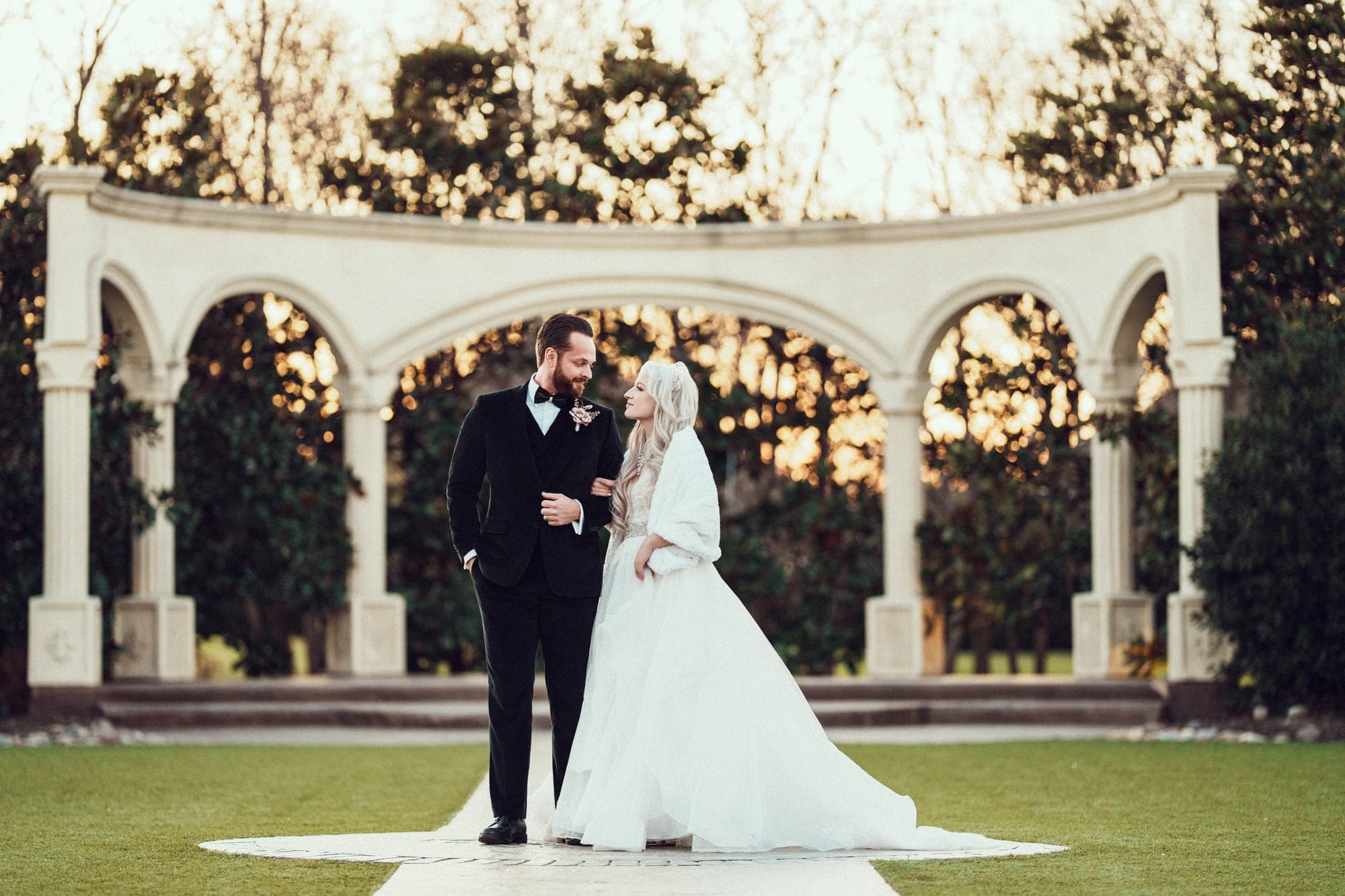
Build the timeline backward from sunset. On a property this photogenic, the light is the one thing you cannot reschedule.
A Few Practical Notes for Little Elm
Little Elm sits on the north end of Lewisville Lake, and North Texas weather is the variable you plan around, not against. Summer afternoons run hot, so getting-ready and detail time belongs in the air conditioning, and heavier portrait work belongs in the shade or after five. Spring and fall are the friendliest windows for light and temperature both, which is part of why they book first.
A grand indoor staircase is also your rain plan. When a Texas storm rolls through, and it will, a property with strong interior architecture means the day loses nothing, because the most dramatic setting on the estate was never dependent on the sky in the first place.
Planning a Wedding at Knotting Hill Place?
To see the venue photographed across a full day, from the chapel to the colonnade to a smoke-lit send-off, look through Carly and Christopher's winter wedding at Knotting Hill Place.
We photograph weddings across the metroplex from our McKinney studio, and an estate like this one is exactly the kind of full-day, single-address property we love to work. Start with the Knotting Hill Place venue guide for the room-by-room layout, then see how we cover the surrounding area as your Little Elm wedding photographer.
When you are ready to talk specifics, browse more Dallas-Fort Worth wedding photography, read how the investment works, or contact us to check your date.